
Originally published June 4, 2026. Last updated September 21, 2026.
Infrared Heating Pad vs Regular Heating Pad: What’s the Difference?
Infrared and regular heating pads can both provide warmth, but neither type is automatically better for every person or condition. Infrared models are often heavier and more expensive and may feel different because of their design, while conventional electric pads usually warm quickly and cost less.
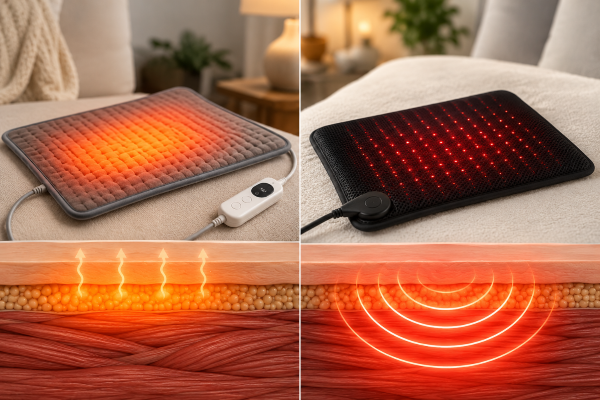
The main difference is how the heat is delivered. Regular heating pads use electric heating elements to warm the skin directly. Infrared heating pads use far-infrared energy that may penetrate deeper into muscles and joints, providing a different type of warmth.
For everyday aches and pains, both options can be effective. The best choice depends on your budget, comfort preferences, and the type of pain you’re trying to relieve.
Best Heating Pads for Pain Relief: Complete Buying Guide (2026)
Quick Comparison Table
| Feature | Infrared Heating Pad | Regular Heating Pad |
|---|---|---|
| Heat experience | Often marketed as a deeper-feeling warmth; results vary by device | Direct conductive warmth at the pad surface |
| Warm-up | May take longer depending on the model | Often warms quickly |
| Price | Usually higher | Usually lower |
| Weight | Stone-filled models may be heavier | Often lighter and easier to position |
| Evidence | Infrared therapy research is promising but device-specific | Heat can provide temporary comfort; follow product instructions |
| What to verify | Temperature range, timer, weight, warranty, safety listing | Temperature settings, timer, dimensions, warranty, safety listing |
How Regular Heating Pads Work
Regular heating pads use electrical heating elements that generate warmth.
The heat travels directly to the skin and surrounding tissues.
Benefits include:
- Quick heat-up time
- Affordable price
- Simple operation
- Wide variety of sizes
- Easy replacement
Regular heating pads are commonly used for:
- Menstrual cramps
- Mild back pain
- Neck tension
- Everyday muscle soreness
- General comfort
How Infrared Heating Pads Work
Infrared heating pads use far-infrared energy to create heat.
Instead of simply warming the skin, infrared heat may reach deeper tissues and muscles.
Potential benefits include:
- Deep warming sensation
- Improved circulation
- Longer-lasting warmth
- Comfortable lower surface temperatures
Many users choose infrared heating pads for chronic pain and long-term use.
Which Type Is Better for Different Conditions?
Arthritis
Infrared heating pads are often preferred because they may provide deeper warmth around stiff joints.
Sciatica
Many people with sciatica enjoy the deeper heat sensation of infrared pads.
However, regular heating pads can also provide significant relief.
Neck Pain
Both options work well.
Regular heating pads are often more convenient for short sessions.
Shoulder Pain
Infrared heating pads may help users seeking deeper muscle relaxation.
Menstrual Cramps
Regular heating pads are usually sufficient and more affordable.
Pros and Cons of Infrared Heating Pads
Pros
- Deep heat sensation
- Comfortable extended use
- May improve circulation
- Popular for chronic pain
Cons
- Higher cost
- Longer warm-up time
- Heavier models available
- Fewer product choices
Pros and Cons of Regular Heating Pads
Pros
- Affordable
- Widely available
- Fast heat-up
- Easy to use
- Lightweight
Cons
- Surface-level heat
- Can become hot at the skin surface
- May require more frequent replacement
Burn Risk Comparison
Both types can cause burns if misused.
To stay safe:
- Follow the session length and temperature limits for the exact product
- Avoid sleeping on active heating pads
- Follow manufacturer instructions
- Inspect cords regularly
Infrared heating pads often operate at lower surface temperatures, which some users find more comfortable.
Are Infrared Heating Pads Worth the Extra Cost?
For some people, yes.
An infrared heating pad may be worth the investment if you:
- Experience chronic pain
- Have arthritis
- Deal with recurring stiffness
- Use heat therapy frequently
If you only need occasional relief from muscle soreness or cramps, a traditional heating pad may offer better value.
Who Should Choose a Regular Heating Pad?
A regular heating pad is often best for:
- Budget-conscious shoppers
- Occasional pain relief
- Menstrual cramps
- Mild muscle soreness
- Quick heat therapy sessions
Who Should Choose an Infrared Heating Pad?
An infrared heating pad may be best for:
- Arthritis sufferers
- Chronic pain conditions
- Frequent heat therapy users
- Deep muscle stiffness
- Long-duration treatment sessions
Frequently Asked Questions
Do Infrared Heating Pads Work Better?
Not necessarily. They provide a different type of heat that some users prefer, especially for chronic discomfort.
Are Infrared Heating Pads Safe?
When used according to manufacturer instructions, infrared heating pads are generally considered safe.
Do Infrared Heating Pads Get as Hot as Regular Heating Pads?
Many infrared models operate at lower surface temperatures while still providing a strong warming sensation.
Which Heating Pad Is Better for Arthritis?
Many arthritis sufferers prefer infrared heating pads because of their deeper warmth.
Which Heating Pad Is Better for Menstrual Cramps?
A regular heating pad is often sufficient and more affordable.
Related Heating Pad Guides
- Best Heating Pad for Sciatica Relief
- Best Heating Pad for Arthritis Pain
- Best Heating Pad for Neck Pain
- Best Heating Pad for Shoulder Pain
- Best Heating Pad for Menstrual Cramps
- Best Heating Pad for Back Pain
Final Verdict
If you want affordable, fast, and convenient heat therapy, a regular heating pad is usually the best choice. If you’re looking for deeper warmth, longer-lasting comfort, and relief aimed at chronic muscle or joint stiffness, an infrared heating pad may be worth the extra investment.
A simple rule is this:
Choose based on verified controls, fit, comfort, price, and safety instructions rather than assuming one technology will treat a particular diagnosis.
Research on infrared therapy for musculoskeletal discomfort is promising but uses different devices and protocols, so results should not be generalized to every consumer pad. Powered heating devices can cause burns if misused, especially where sensation or circulation is reduced.
Evidence reviewed: systematic review of infrared radiation for musculoskeletal conditions and FDA heating-device guidance.