

What Causes Insomnia After 40?
The most common causes of insomnia after 40 include:
- Hormonal changes
- Elevated stress and cortisol
- Chronic pain
- Sleep apnea
- Medication side effects
- Anxiety and racing thoughts
- Poor sleep habits
Most cases improve when the underlying cause is identified and addressed.
Insomnia after 40 is common, distressing, and often misunderstood. Many adults assume difficulty sleeping is just part of getting older, but persistent insomnia — trouble falling asleep, staying asleep, or waking up too early — is not something you have to accept. The causes are often identifiable, and the solutions do not always require medication. This guide explains why insomnia becomes more common after 40, what usually drives it, and what actually helps.
Insomnia After 40 Is Treatable
Insomnia after 40 is usually caused by a mix of hormonal shifts, stress, lifestyle habits, and sometimes underlying health conditions. It is rarely permanent. Cognitive behavioral therapy for insomnia (CBT-I), sleep hygiene improvements, stress management, and addressing pain or hormonal issues can all help. The first step is identifying what is triggering your sleep problems.
What Qualifies as Insomnia?
Insomnia is more than an occasional bad night. It involves difficulty falling asleep, staying asleep, or waking up too early — occurring at least three nights per week for three months or longer. It also includes daytime impairment: fatigue, poor concentration, mood changes, or worry about sleep itself. If this sounds familiar, you may be dealing with chronic insomnia rather than simple sleeplessness.
Why Insomnia Becomes More Common After 40
Your 40s and 50s bring changes that directly impact sleep regulation. Understanding these shifts helps you target the right solutions.
Hormonal fluctuations
For women, perimenopause and menopause can cause night sweats, hot flashes, and progesterone drops, all of which disrupt sleep continuity. For men, declining testosterone can reduce sleep quality and deepen fatigue. Hormonal insomnia is often underdiagnosed because it is mistakenly written off as stress or aging.
Elevated cortisol and stress
Stress does not magically decrease after 40. Career pressure, caregiving, health changes, and financial concerns often peak in midlife. Elevated cortisol blocks melatonin and keeps the nervous system in alert mode. Over time, this can train your brain to associate bedtime with anxiety rather than rest. For more on the cortisol-sleep connection, see How Stress and Cortisol Ruin Sleep Quality After 40.
Racing thoughts and mental overactivity
Insomnia after 40 often looks like an overactive mind. You may replay the day, plan tomorrow, or worry about sleep itself. This mental overdrive is one of the most common insomnia triggers, and it is closely tied to stress. For strategies to quiet a racing mind, see Why Is My Mind Racing When I Try to Sleep?.
Pain and physical discomfort
Arthritis, bursitis, back pain, and general stiffness can wake you up or prevent deep sleep. Pain and insomnia feed each other: poor sleep lowers pain tolerance, and pain disrupts sleep. Addressing both is often necessary to break the cycle. For more on the pain-sleep connection, see Can Lack of Sleep Make Joint Pain Worse?.
Medications and health conditions
Some medications commonly taken after 40 — including certain blood pressure drugs, antidepressants, and steroids — can interfere with sleep. Health conditions such as sleep apnea, thyroid disorders, diabetes, and anxiety also raise insomnia risk. If your sleep problems started after a new medication or diagnosis, discuss timing or alternatives with your provider.
What Actually Helps With Insomnia After 40
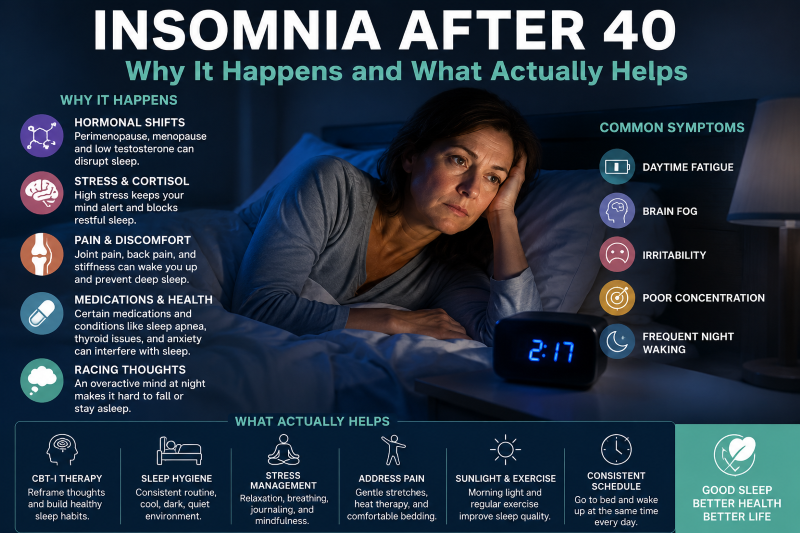
The most effective insomnia treatments address the root cause rather than masking symptoms. Here are the approaches that have the strongest evidence.
Cognitive Behavioral Therapy for Insomnia (CBT-I)
CBT-I is considered the gold standard for chronic insomnia. It helps you reframe unhelpful thoughts about sleep, set consistent sleep schedules, and build habits that support rest. Unlike sleeping pills, CBT-I teaches skills that last. Many health systems now offer CBT-I digitally or in person.
Sleep hygiene and routine
Consistent bedtime habits signal your brain that it is time to wind down. Keep your bedroom cool, dark, and quiet. Avoid caffeine after 2 PM, limit alcohol, and stop screen use at least 60 minutes before bed. A short relaxation ritual — reading, stretching, breathing exercises — can make falling asleep easier. For a step-by-step plan, see How to Build a Simple Bedtime Routine.
Stress management techniques
Since stress and insomnia are tightly linked, managing stress during the day reduces nighttime overactivity. Practices such as progressive muscle relaxation, guided imagery, journaling, or walking can lower cortisol and make it easier to fall asleep.
Addressing pain and discomfort
If joint pain or stiffness is waking you, treating the pain directly is essential. Gentle evening stretching, heat therapy, or revisiting your mattress and pillow can reduce nighttime discomfort. For practical joint care ideas, see Simple Morning Stretches for Tight Joints.
Limiting time in bed awake
If you cannot fall asleep within 20 minutes, get out of bed and do a quiet, dim activity until you feel sleepy. This prevents your brain from associating bed with frustration and restlessness. Return to bed only when you feel ready to sleep.
Morning sunlight and exercise
Getting natural light within the first hour of waking and exercising regularly earlier in the day strengthens your circadian rhythm. Both habits improve sleep onset and deep sleep over time.
When to See a Doctor
See a healthcare provider if insomnia persists for more than a few weeks, is accompanied by loud snoring or gasping at night, or if daytime fatigue affects your safety, mood, or work. A medical evaluation can screen for sleep apnea, thyroid issues, anxiety, depression, or medication effects. Treating the underlying cause often resolves insomnia faster than sleep hacks alone.
Frequently Asked Questions
Why does insomnia happen after 40?
Hormonal shifts, increased stress, pain, medication changes, and natural decreases in deep sleep all contribute to higher insomnia rates after 40.
How can I fix insomnia without medication?
CBT-I, sleep hygiene, stress management, pain control, and consistent schedules are effective for most people. Medications may help short-term but do not teach long-term sleep skills.
Can stress alone cause insomnia?
Yes. Stress is one of the most common causes of acute and chronic insomnia at any age. After 40, it often combines with other factors to make sleep problems worse.
Does menopause cause insomnia?
Yes. Hot flashes, night sweats, and hormonal fluctuations during perimenopause and menopause are major contributors to insomnia in women over 40.
How long does insomnia last?
Acute insomnia may last days to weeks. Chronic insomnia lasts three months or longer. With the right strategies, even chronic insomnia can improve significantly.
5 Internal Links to Explore
For more on sleep, stress, and healthy habits after 40, explore these related articles on HealthWellnessWay.com.
- How to Sleep Better Naturally After 40
- Why Is My Mind Racing When I Try to Sleep?
- Why Am I Tired After 8 Hours of Sleep?
- How Stress and Cortisol Ruin Sleep Quality After 40
- Start Here: Simple Ways to Feel Better After 40
This article is for educational purposes only and is not intended to diagnose, treat, cure, or prevent any medical condition. Always consult a qualified healthcare professional regarding sleep concerns.