
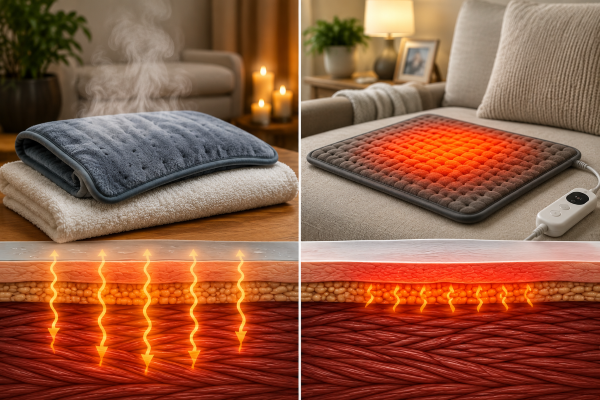
Moist Heat vs Dry Heat Heating Pads: What’s the Difference?
Moist heat heating pads use water or moisture to create warmth that may penetrate tissues more effectively, while dry heat heating pads provide convenient surface warmth without added moisture.
Both types can help relieve pain, stiffness, and muscle tension. The best choice depends on your comfort preferences, the type of pain you’re treating, and how you plan to use the heating pad.
As a general rule, moist heat is often preferred for deeper muscle relaxation, while dry heat is more convenient for everyday use.
Best Heating Pads for Pain Relief: Complete Buying Guide (2026)
Quick Comparison Table
| Feature | Moist Heat | Dry Heat |
|---|---|---|
| Heat Penetration | Deeper feeling warmth | Surface warmth |
| Convenience | Requires moisture | Ready to use |
| Portability | Less convenient | More convenient |
| Setup Time | Slightly longer | Immediate |
| Everyday Use | Moderate | Excellent |
| Best For | Tight muscles and stiffness | General pain relief |
What Is Moist Heat Therapy?
Moist heat uses water vapor or damp materials to deliver warmth.
Some heating pads create moisture automatically, while others require dampening a sponge insert or cloth before use.
Moist heat is commonly used for:
- Muscle tension
- Joint stiffness
- Back pain
- Neck pain
- Shoulder pain
- Arthritis discomfort
Many physical therapists recommend moist heat because it often feels more soothing to tight muscles.
What Is Dry Heat Therapy?
Dry heat comes directly from an electric heating element.
This is the most common type of heating pad sold today.
Benefits include:
- Fast heat-up time
- Easy operation
- No moisture required
- Less maintenance
- Better portability
Most standard electric heating pads use dry heat.
How Moist Heat Works
Moist heat introduces water vapor into the treatment area.
This may help:
- Relax muscles
- Increase circulation
- Improve flexibility
- Reduce stiffness
Many users report that moist heat feels like it reaches deeper into muscles compared to traditional dry heat.
How Dry Heat Works
Dry heat warms the skin and surrounding tissues directly.
Benefits include:
- Quick relief
- Convenient daily use
- Consistent temperatures
- Easy setup
Dry heat remains one of the most popular forms of home heat therapy.
Which Is Better for Different Conditions?
Arthritis
Many arthritis sufferers enjoy moist heat because it can help loosen stiff joints.
Both options can be effective.
Neck Pain
Moist heat often works well for tight neck muscles.
Dry heat remains convenient for quick sessions.
Shoulder Pain
Many people prefer moist heat for deep shoulder muscle tension.
Sciatica
Both moist and dry heat can help relieve muscle tightness associated with sciatica.
Menstrual Cramps
Dry heat is often the simplest and most convenient option.
Benefits of Moist Heat Heating Pads
Pros
- Deep warming sensation
- May help muscles relax faster
- Often preferred by physical therapists
- Comfortable for chronic stiffness
Cons
- Requires moisture
- More setup involved
- Less convenient while traveling
- Some models require maintenance
Benefits of Dry Heat Heating Pads
Pros
- Easy to use
- Fast heat-up
- Portable
- Affordable
- Widely available
Cons
- Heat may feel more surface-level
- Can dry out skin during long sessions
- Some users prefer the feel of moist heat
Which Heating Pad Should You Buy?
Choose Moist Heat If:
- You experience chronic muscle tension
- Stiffness is your main concern
- You want deeper-feeling warmth
- You regularly use heat therapy
Choose Dry Heat If:
- You want convenience
- You need quick pain relief
- You travel frequently
- You prefer simple operation
Can You Convert a Dry Heating Pad Into Moist Heat?
In many cases, yes.
Some manufacturers allow you to:
- Lightly dampen the included cover
- Use a damp cloth between the pad and skin
- Add moisture according to manufacturer instructions
Always follow the instructions provided with your heating pad.
Frequently Asked Questions
Is Moist Heat Better Than Dry Heat?
Not necessarily. Many people prefer moist heat for muscle tension, while others prefer the convenience of dry heat.
Do Physical Therapists Recommend Moist Heat?
Many physical therapists use moist heat because it often feels more effective for tight muscles and stiffness.
Is Dry Heat Good for Arthritis?
Yes. Dry heat can help improve circulation and reduce stiffness associated with arthritis.
Which Is Better for Neck Pain?
Both can help. Moist heat is often preferred for muscle tightness, while dry heat is more convenient.
Can I Use Moist Heat Every Day?
Many people safely use moist heat daily as part of their pain management routine.
Related Heating Pad Guides
- Best Heating Pad for Sciatica Relief
- Best Heating Pad for Arthritis Pain
- Best Heating Pad for Neck Pain
- Best Heating Pad for Shoulder Pain
- Best Heating Pad for Menstrual Cramps
- Best Heating Pad for Back Pain
- Infrared Heating Pad vs Regular Heating Pad
Final Verdict
Moist heat and dry heat heating pads can both provide effective pain relief. Moist heat is often preferred for deeper muscle relaxation and stiffness, while dry heat offers unmatched convenience and ease of use.
If you want the simplest everyday solution, choose a dry heat heating pad. If you are dealing with chronic muscle tightness or joint stiffness and want a deeper warming sensation, moist heat may be the better option.