
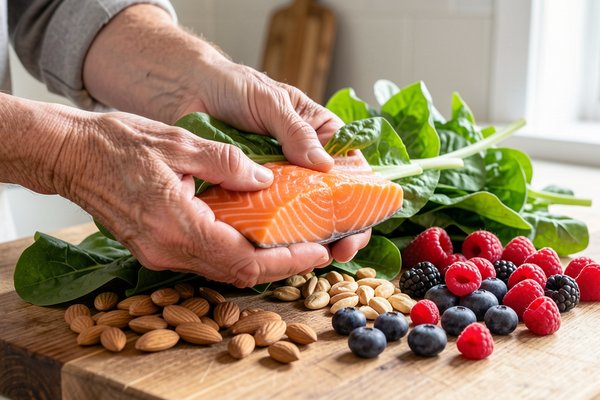
If your joints feel stiff—especially after sitting for prolonged periods or right when you wake up in the morning—your daily diet plays an important supporting role in managing that discomfort.
Nutrient-dense foods like fatty fish, leafy greens, berries, nuts, seeds, extra-virgin olive oil, ginger, and turmeric deliver plant compounds and essential fatty acids that support a healthy inflammatory response. While food alone cannot cure joint conditions like osteoarthritis, combining a balanced diet with gentle daily movement, proper hydration, and restful sleep can make a noticeable difference in long-term joint comfort.
At a Glance: Key Joint-Supporting Foods
| Food Group | Key Nutrients | Practical Everyday Usage |
|---|---|---|
| Fatty Fish (Salmon, Sardines) | Omega-3 Fatty Acids | Replace 2 meat meals per week with wild fish |
| Dark Leafy Greens (Spinach, Kale) | Antioxidants, Fiber, Vitamin K | Toss into morning omelets, soups, or smoothies |
| Berries & Cherries | Anthocyanins, Vitamin C | Swap out processed sweets for fresh berries |
| Nuts & Seeds (Walnuts, Chia) | Magnesium, Healthy Fats | Add a small handful to oatmeal or yogurt |
| Extra-Virgin Olive Oil | Oleocanthal, Polyphenols | Use as a primary oil for dressing and drizzling |
Why Food Matters for Stiff Joints
Joint stiffness can stem from multiple factors, including physical inactivity, normal age-related changes, previous injuries, or underlying arthritis. The foods you consume supply the essential fats, proteins, vitamins, minerals, and antioxidants your body relies on to rebuild connective tissues and maintain cartilage health.
Rather than searching for a single “miracle cure” food, focusing on a consistent, whole-food dietary pattern (such as a Mediterranean-style diet) yields far better long-term outcomes for joint mobility.
7 Whole Foods That Support Joint Comfort
1. Fatty Fish
Cold-water fish like salmon, sardines, trout, and mackerel are rich sources of EPA and DHA omega-3 fatty acids. Extensive nutrition research points to omega-3s for their ability to support a balanced inflammatory response in the body, making them a cornerstone of any joint-conscious eating plan.
2. Dark Leafy Greens
Spinach, kale, collard greens, and Swiss chard provide high concentrations of vitamins A, C, and K, alongside calcium and antioxidants. Adding greens to your diet is one of the easiest ways to increase overall nutrient density without adding excessive calories.
Quick ways to add more greens:
- Blend fresh spinach into morning smoothies
- Fold chopped kale or Swiss chard into soups and stews
- Use leafy greens as a base for colorful lunch bowls
3. Berries and Cherries
Blueberries, blackberries, raspberries, strawberries, and tart cherries owe their rich colors to anthocyanins—potent antioxidant compounds that help combat oxidative stress in body tissues. Replacing refined sweets with fresh berries provides natural sweetness along with essential dietary fiber.
4. Nuts and Seeds
Walnuts, almonds, chia seeds, flaxseeds, and pumpkin seeds offer a rich mix of plant-based omega-3s, healthy fats, and magnesium. Magnesium plays an essential role in maintaining normal muscle contraction and nerve function, helping prevent surrounding muscle tightness near stiff joints.
Related Reading: Does Magnesium Really Help You Sleep?
5. Extra-Virgin Olive Oil
Extra-virgin olive oil is a primary fat source in Mediterranean diets. It contains monounsaturated fatty acids alongside oleocanthal, a naturally occurring phenolic compound studied for its soothing properties. Use raw extra-virgin olive oil for salad dressings or drizzling over cooked vegetables instead of butter or processed sauces.
6. Fresh Ginger
Ginger contains active plant compounds called gingerols and shogaols. Beyond adding vibrant flavor without excess salt or sugar, ginger has been widely studied for easing minor joint discomfort after activity. Try grating fresh ginger root into hot tea, stir-fries, or roasted dishes.
7. Turmeric
Turmeric contains curcumin, a natural polyphenol widely recognized for supporting joint flexibility and comfort, particularly in knee joints. Pairing dietary turmeric with black pepper (which contains piperine) enhances curcumin absorption in the body.
Foods Worth Reducing for Joint Comfort
Instead of strict elimination diets, focus on replacing highly processed, low-nutrient foods with whole options. Minimizing these foods can help lower overall systemic strain:
- Sugar-sweetened sodas, energy drinks, and flavored coffees
- Ultra-processed baked goods, pastries, and candy
- Deep-fried foods made with heavily refined seed oils
- Highly processed cured meats high in sodium
A Simple One-Day Joint-Friendly Menu
Breakfast
Warm oatmeal topped with fresh blueberries, chopped walnuts, chia seeds, and a dash of ground cinnamon.
Lunch
Baby spinach and arugula salad topped with wild-caught grilled salmon, cherry tomatoes, pumpkin seeds, and a homemade extra-virgin olive oil vinaigrette.
Afternoon Snack
Plain Greek yogurt served with sliced strawberries or a small handful of raw almonds.
Dinner
Baked chicken breast or baked cod served alongside roasted sweet potatoes and sautéed kale in garlic and olive oil.
Evening Drink
Warm unsweetened ginger-lemon tea or fresh water with a slice of cucumber.
Hydration and Daily Movement
Cartilage in your joints relies on fluid to stay lubricated and function smoothly. Chronic mild dehydration can contribute to joint friction and increased stiffness, especially first thing in the morning.
Combine proper daily water intake with light, low-impact daily movement (such as walking, swimming, or gentle morning stretching) to keep synovial fluid circulating through your joints.
Learn More: Can Dehydration Make Your Joints Feel Stiff in the Morning?
Frequently Asked Questions
What should I eat daily for stiff joints?
Focus on a balanced diet rich in leafy greens, berries, wild fish, nuts, seeds, and healthy fats like olive oil while keeping processed sugars to a minimum.
What is the best drink for joint stiffness?
Plain water is best. Unsweetened herbal teas such as green tea or fresh ginger tea also provide hydrating plant compounds without added sugar.
Are bananas good for joint mobility?
Bananas offer essential potassium, vitamin B6, and fiber. While they are a healthy addition to your eating plan, they work best as part of an overall balanced diet rather than a standalone targeted fix.
When should I see a doctor for joint stiffness?
If joint stiffness persists for several weeks, is accompanied by severe swelling, heat, or redness, follows a acute injury, or limits your ability to perform daily routines, consult a medical professional for an official evaluation.
Related Joint Health Guides
- Top Supplements to Consider for Morning Joint Stiffness
- Can Dehydration Make Your Joints Feel Stiff in the Morning?
- Why You Wake Up Stiff and What to Do About It
Medical Disclaimer: This article is for general educational purposes only and is not a substitute for professional medical advice, diagnosis, or treatment.