

Waking up stiff in the morning is one of the most common complaints after 40. You get out of bed and your back feels tight, your hips do not want to move, and your knees or ankles take a few minutes to loosen up. For some people it is mild. For others it feels like their whole body aged overnight.
The good news is that morning stiffness is often linked to things you can improve. Sleep position, daytime movement, muscle tightness, mattress support, and inflammation can all play a role. In many cases, a few simple changes make mornings noticeably easier.
This guide covers the most common causes of waking up stiff, what you can do right away to loosen up faster, and when morning stiffness may be a sign that it is time to get medical advice.
Why You Feel Stiff in the Morning
Morning stiffness usually feels worse after hours of not moving. During sleep, your joints stay in the same positions for a long time, your muscles stay relatively inactive, and tight areas can feel even tighter when you first try to move again.
That is one reason the first few steps out of bed often feel the worst. Once you start moving, blood flow increases, muscles warm up, and joints begin to feel smoother and less restricted.
Age can make this more noticeable. Recovery tends to be slower, tissues may feel less forgiving after long periods of stillness, and poor sleep setup matters more than it used to.
Common Causes of Waking Up Stiff in the Morning
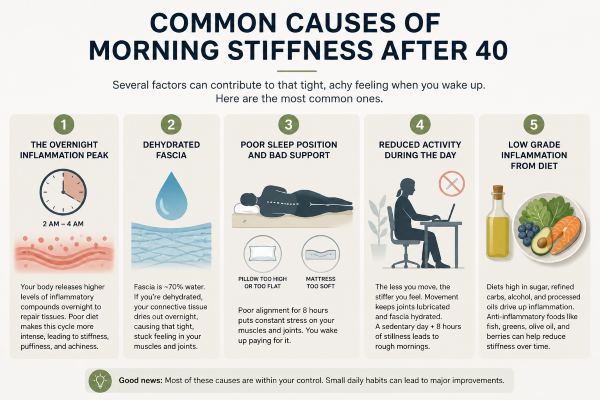
1. Sleeping in One Position for Too Long
Even a decent sleep position can leave you feeling stiff if you stay in it for hours. This is especially common in the lower back, hips, neck, and shoulders.
2. Poor Mattress or Pillow Support
A mattress that is too soft or too worn out can let your spine sag overnight. A pillow that is too high or too flat can leave your neck under tension for hours. You may not notice it while sleeping, but you feel it when you wake up.
3. Tight Muscles and Reduced Daytime Movement
The less you move during the day, the more likely you are to wake up feeling stiff. Long periods of sitting can leave your hips, hamstrings, back, and shoulders tight before you even go to bed.
4. General Inflammation and Lifestyle Habits
For some people, overall inflammation may make morning stiffness feel worse. That can be influenced by things like poor sleep, high stress, excess alcohol, low activity levels, or a diet built around heavily processed foods.
5. Getting Older Changes Recovery
After 40, your body often feels less forgiving after a bad night of sleep, too much sitting, or a poor sleep setup. That does not mean severe stiffness is normal. It just means recovery habits matter more.
What Helps Morning Stiffness Fast
If you wake up stiff and sore, the goal is not to jump straight into a workout. The fastest relief usually comes from gentle movement, warmth, and getting your body out of that long overnight stillness.
A Simple 5-Minute Morning Routine for Stiffness
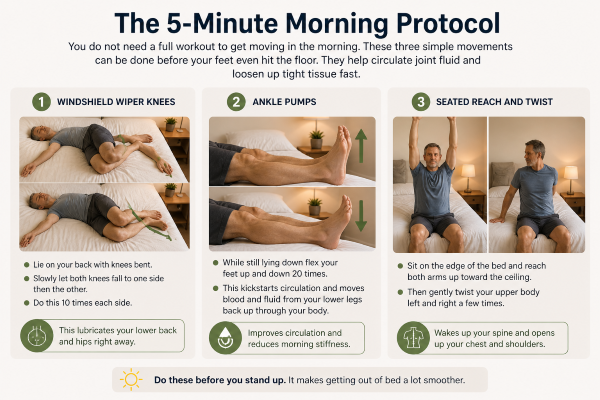
You do not need a full routine to feel better. These simple movements can make getting out of bed much easier.
These small movements are often enough to take the edge off that locked-up feeling before your feet even hit the floor.
Fix Your Sleep Setup
If you wake up stiff every morning, your sleep setup deserves a closer look. The way you support your spine, neck, and hips overnight can make a major difference.
Side Sleepers
Back Sleepers
Your Mattress
Related: Best Pillows for Neck and Shoulder Pain
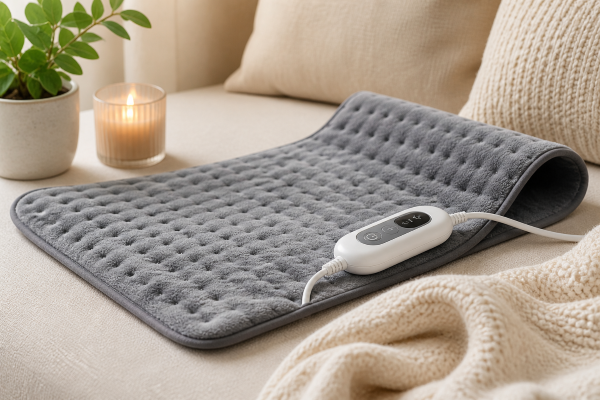
Use Heat to Loosen Up Faster
 Best Heating Pads for Back Pain Relief” class=”wp-image-174″ style=”width:300px” srcset=”https://healthwellnessway.com/wp-content/uploads/2026/05/Best-Heating-Pads-for-Back-Pain-Relief.png 600w, https://healthwellnessway.com/wp-content/uploads/2026/05/Best-Heating-Pads-for-Back-Pain-Relief-300×200.png 300w” sizes=”auto, (max-width: 600px) 100vw, 600px” />
Heat can be one of the fastest ways to reduce morning stiffness, especially if the problem is muscle tightness in the lower back, hips, or shoulders.
Related: Best Heating Pads for Back Pain Relief
What You Can Change Tonight to Feel Better Tomorrow
| Target | What to Do |
| Sleep Position | Add a pillow between your knees if you sleep on your side, or under your knees if you sleep on your back. |
| Evening Movement | Spend 5 minutes stretching your hips, hamstrings, and lower back before bed. |
| Hydration | Make sure you are drinking enough water throughout the day instead of trying to catch up only at night. |
| Mattress Check | Pay attention to whether your bed feels supportive or whether you wake up in the same sore positions every day. |
| Diet and Recovery | Cut back on heavily processed foods and alcohol if they seem to make you feel worse the next morning. |
Build More Movement Into Your Day
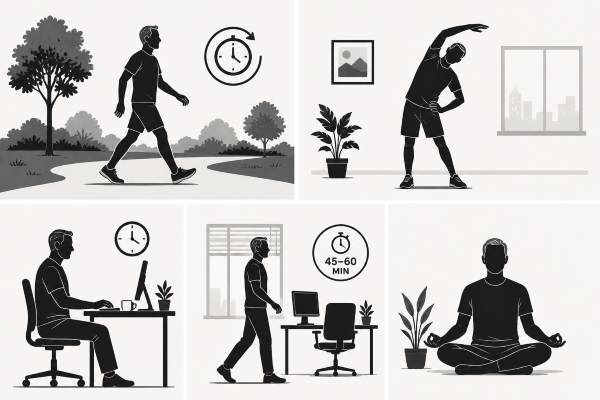
One of the best long-term fixes for morning stiffness is simply moving more during the day. Long periods of sitting often show up the next morning as tight hips, a stiff back, and joints that feel slow to wake up.
Related: Simple Morning Stretches for Tight Joints
Related: How to Stay Active After 40 Without Overdoing It
When Morning Stiffness Could Mean Something More
Not all morning stiffness is just a sleep or lifestyle issue. In some cases, it can be a sign that something more serious is going on.
If you notice those signs, or if you have tried the basic changes above for a few weeks without improvement, it is a good idea to talk with a healthcare professional.
Frequently Asked Questions
Why am I so stiff in the morning?
The most common reasons are sleeping in one position too long, muscle tightness, poor mattress or pillow support, low daytime movement, and general inflammation or recovery issues.
Is it normal to wake up stiff after 40?
It is common, but that does not mean you should ignore it. Mild stiffness is often linked to sleep setup and activity habits, and many people can improve it with simple changes.
What helps morning stiffness go away faster?
Gentle movement, a short morning routine, light stretching, a warm shower, and a heating pad are some of the fastest ways to loosen up.
When should I worry about morning stiffness?
You should pay closer attention if the stiffness lasts a long time, is getting worse, is centered in one swollen or hot joint, or comes with other unusual symptoms.
Can dehydration cause morning stiffness?
Some people feel worse when they are not well hydrated, especially if they also sleep poorly or spend a lot of time sitting. It is one factor that may contribute, even if it is not the only cause.
Start With One Change
You do not need to overhaul everything at once. Pick one change and try it consistently for a week.
Small changes add up. In a lot of cases, better mornings start with better movement, better support, and a more intentional routine.
Related Articles
This content is for informational purposes only and is not medical advice. Always speak with a qualified healthcare professional before making changes to your health routine or starting any supplement.
Related: For arthritis-specific causes, read can arthritis cause morning stiffness all over your body. Sleep factors also play a role — see can lack of sleep make joint pain worse.