
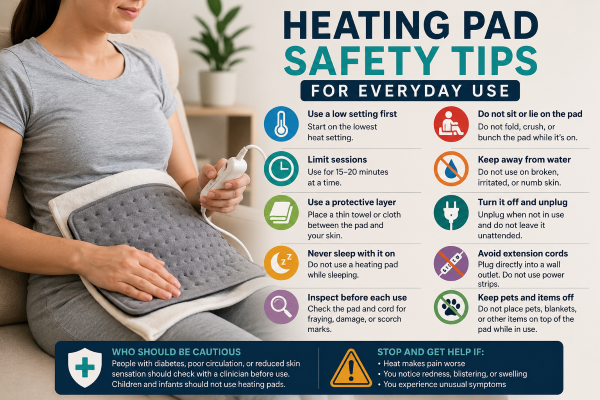
What Are the Most Important Heating Pad Safety Tips?
The most important heating pad safety tips are to start with a low heat setting, limit sessions to about 15 to 20 minutes, never sleep with a heating pad turned on, and inspect the pad and cord for damage before each use. Using a heating pad correctly can help reduce the risk of burns, overheating, and electrical hazards while still providing effective pain relief.
Heat therapy is commonly used for back pain, arthritis, muscle tension, neck pain, shoulder discomfort, menstrual cramps, and sciatica. While heating pads are generally safe when used properly, following a few basic precautions can help you avoid injuries.
Why Heating Pad Safety Matters
Heating pads provide warmth that can help relax muscles, improve circulation, and temporarily reduce pain. However, prolonged exposure to heat or improper use can increase the risk of burns, skin irritation, and electrical problems.
Most heating pad injuries occur when users fall asleep with the pad on, use damaged equipment, or apply heat for too long.
Everyday Heating Pad Safety Tips
Start With a Low Heat Setting
Always begin with the lowest setting and increase the temperature only if needed. Higher temperatures do not always provide better relief and can increase the risk of skin burns.
Limit Sessions to 15 to 20 Minutes
Most people benefit from short heat therapy sessions lasting about 15 to 20 minutes. Allow your skin to cool between treatments before applying heat again.
Place a Barrier Between the Pad and Your Skin
Use a thin towel, cloth, or cover between your skin and the heating pad. This helps reduce direct heat exposure and lowers the risk of burns.
Never Sleep With a Heating Pad On
Even if your heating pad has an automatic shutoff feature, you should never sleep while using it. Extended heat exposure can cause burns without you realizing it.
Inspect the Pad Before Each Use
Before plugging in your heating pad, check for:
- Frayed cords
- Exposed wires
- Burn marks
- Cracks in the controller
- Damaged fabric
Replace the heating pad immediately if you notice any signs of wear or damage.
Do Not Sit or Lie on the Heating Pad
Heating pads are designed to rest against the body, not support body weight. Sitting or lying on a heating pad can damage the internal heating elements and create hot spots.
Avoid Folding or Crushing the Pad
Do not fold, bunch, or crush the heating pad while it is operating. This can cause uneven heating and increase the risk of overheating.
Keep Heating Pads Away From Water
Never use an electric heating pad near water, including:
- Bathtubs
- Showers
- Sinks
- Swimming pools
Water and electricity create a serious safety hazard.
Do Not Use on Broken or Numb Skin
Avoid applying heat to:
- Open wounds
- Skin infections
- Rashes
- Areas with reduced sensation
If you cannot feel heat properly, you may not notice a burn developing.
Turn It Off and Unplug It
After each session:
- Turn off the heating pad.
- Unplug it from the outlet.
- Allow it to cool.
- Store it according to the manufacturer’s instructions.
Never leave a heating pad unattended while plugged in.
Avoid Extension Cords and Power Strips
Plug your heating pad directly into a wall outlet whenever possible. Extension cords and overloaded power strips may increase electrical risks.
Keep Blankets and Pets Off the Pad
Do not place blankets, pillows, clothing, or pets on top of an active heating pad. Covering the pad can trap heat and increase the chance of overheating.
Who Should Be Extra Careful When Using a Heating Pad?
Certain individuals may have a higher risk of burns and should consult a healthcare professional before using heat therapy.
These include people with:
- Diabetes
- Poor circulation
- Neuropathy
- Reduced skin sensation
- Certain neurological conditions
Heating pads are generally not recommended for infants or young children without direct medical guidance.
When Should You Stop Using a Heating Pad?
Stop using your heating pad and seek medical advice if:
- Pain becomes worse
- Skin becomes red or blistered
- You notice swelling
- Symptoms change unexpectedly
- Heat causes unusual discomfort
Heat therapy should provide comfort, not increase pain.
Simple Heating Pad Safety Routine
Before each use:
- Inspect the pad and cord
- Start on the lowest setting
- Place a cloth between the pad and your skin
- Limit use to 15 to 20 minutes
- Check your skin regularly
- Turn off and unplug the pad when finished
- Store the pad flat or according to the manufacturer’s instructions
Following these simple steps can help you enjoy the benefits of heat therapy while minimizing safety risks.
Related Guides
- Best Heating Pads for Pain Relief: Complete Buying Guide (2026)
- How Long Should You Use a Heating Pad?
- Infrared Heating Pad vs Regular Heating Pad
- Moist Heat vs Dry Heat Heating Pads
- Are Infrared Heating Pads Worth It?
Final Thoughts
Heating pads can be a safe and effective way to manage everyday aches and pains when used correctly. Starting with a low setting, limiting session length, checking for damage, and avoiding overnight use are some of the easiest ways to stay safe while enjoying the benefits of heat therapy.