
How Long Should You Use a Heating Pad?
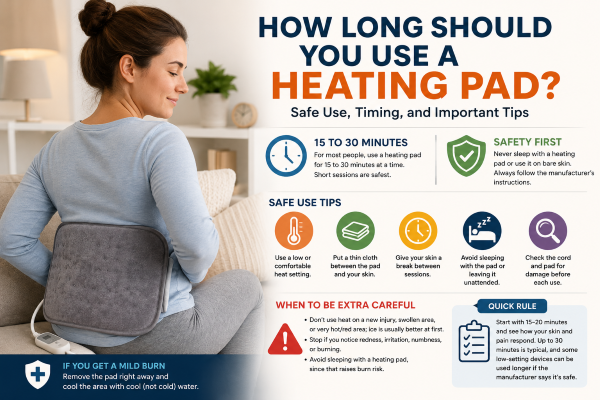
For most people, a heating pad should be used for about 15 to 30 minutes at a time. Short sessions are generally safest and often provide enough warmth to help relax muscles, reduce stiffness, and ease discomfort. It is important to avoid falling asleep with a heating pad and to follow the manufacturer’s instructions for safe use.
Whether you’re using heat therapy for back pain, arthritis, muscle tension, neck pain, shoulder soreness, or sciatica, proper timing can help you get the benefits while reducing the risk of burns or skin irritation.
Why Heating Pads Work
Heating pads provide gentle warmth that increases blood flow to the affected area. Improved circulation helps deliver oxygen and nutrients to tissues while encouraging muscles to relax.
Many people use heating pads to help with:
- Back pain
- Neck pain
- Shoulder pain
- Arthritis
- Sciatica
- Muscle soreness
- Menstrual cramps
Heat therapy can be a simple and affordable way to improve comfort at home.
How Long Is Too Long?
Most experts recommend using a heating pad for:
- 15 to 20 minutes for general pain relief
- Up to 30 minutes for some types of muscle tension
- Longer sessions only if specifically approved by the manufacturer
Using heat for extended periods may increase the risk of:
- Skin irritation
- Burns
- Excessive redness
- Heat rash
If your skin becomes uncomfortable, remove the heating pad immediately.
Safe Heating Pad Use
Follow these simple safety tips whenever you use a heating pad:
Use a Comfortable Heat Setting
Start with a low or medium setting. Higher temperatures are not always more effective and may increase the risk of burns.
Place a Barrier Between the Pad and Your Skin
Use a thin towel, cloth, or cover between the heating pad and your skin.
Give Your Skin Time to Rest
If you plan to use the heating pad multiple times throughout the day, allow your skin to cool between sessions.
Never Sleep With a Heating Pad
Even heating pads with automatic shutoff features should not be used while sleeping.
When Heat May Not Be the Best Choice
Heat therapy is not appropriate for every situation.
Avoid using a heating pad on:
- New injuries
- Swollen areas
- Areas that feel hot to the touch
- Active inflammation
For the first 24 to 48 hours after an injury, ice is often the better option.
When to Stop Using a Heating Pad
Stop using the heating pad if you notice:
- Burning sensations
- Numbness
- Skin irritation
- Excessive redness
- Increased pain
Heat therapy should make you feel more comfortable, not less.
Simple Heating Pad Safety Checklist
Before each use:
- Use the heating pad for 15 to 30 minutes at a time
- Place a towel or cloth between the pad and your skin
- Start on a low or medium setting
- Never sleep with the heating pad on
- Never leave it unattended
- Check the cord and pad for damage
- Stop if you feel burning, numbness, or irritation
If you experience a mild heat-related burn, remove the heating pad immediately and cool the area with cool water. Avoid using ice directly on the affected skin.
Frequently Asked Questions
Is 30 Minutes Too Long for a Heating Pad?
For many people, 30 minutes is considered a safe upper limit for a single session. Always monitor your skin and follow the manufacturer’s recommendations.
Can You Use a Heating Pad Multiple Times a Day?
Yes. Many people safely use heating pads several times throughout the day, provided they allow their skin to cool between sessions.
Can You Sleep With a Heating Pad On?
No. Sleeping with a heating pad increases the risk of burns and should be avoided.
Is Heat Better Than Ice?
Heat is generally better for muscle tightness and chronic discomfort. Ice is often recommended for new injuries and swelling.
Related Guides
- Best Heating Pads for Pain Relief: Complete Buying Guide (2026)
- Heating Pad Safety Tips for Everyday Use
- Infrared Heating Pad vs Regular Heating Pad
- Moist Heat vs Dry Heat Heating Pads
- Are Infrared Heating Pads Worth It?
Final Thoughts
Most people should use a heating pad for about 15 to 30 minutes at a time. Starting with a low heat setting, using a protective barrier, and avoiding overnight use can help you enjoy the benefits of heat therapy safely. When used properly, heating pads can be an effective tool for relieving muscle tension, stiffness, and everyday aches and pains.