
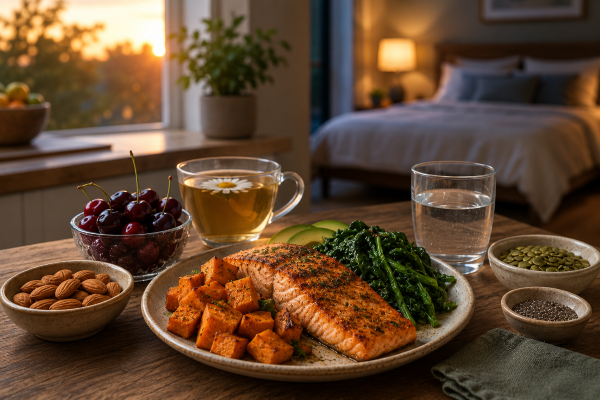
What you eat—and when you eat it—directly shapes how well you sleep after 40. Coffee at 4 PM, a late-night glass of wine, a sugary dessert before bed, or a heavy dinner close to bedtime can all silently degrade your sleep. Conversely, specific foods and eating habits can deepen restorative sleep stages and reduce nighttime awakenings. This guide covers which foods and eating patterns help or harm sleep after 40, with practical guidance you can apply tonight.
Quick Answer: Diet and Sleep Are Deeply Connected After 40
After 40, your digestive system, metabolism, and circadian rhythm all shift, making the food-sleep connection more pronounced than it was in your 20s or 30s. Caffeine lingers longer in your system, alcohol disrupts deep sleep more severely, and high-sugar meals can trigger nighttime cortisol spikes. Eating patterns that once felt harmless can now meaningfully alter your sleep quality. Understanding these connections allows you to make precise adjustments that support better rest.
How Caffeine Affects Sleep After 40
Caffeine blocks adenosine, the chemical that builds sleep pressure throughout the day. For many adults, caffeine has a half-life of about five to six hours, meaning that half of the caffeine from a 4 PM coffee is still active at 10 PM. After 40, caffeine sensitivity increases for many people, extending the effective window even further.
The practical recommendation is a caffeine cutoff at least 8 to 10 hours before bedtime. If you sleep at 10 PM, stop caffeine by noon. Common hidden sources of caffeine include chocolate, certain pain relievers, energy drinks, and some teas. Read labels carefully if you are sensitive.
Does caffeine affect deep sleep specifically?
Yes. Caffeine does not just delay sleep onset—it reduces time spent in deep sleep even when total sleep time appears normal. This means you can have a full seven-hour night and still feel physically unrestored because deep sleep, the most restorative stage, was shortened. This is a major reason tiredness after adequate sleep is so common after 40. For more on this, see Why Am I Tired After 8 Hours of Sleep?.
Alcohol and Sleep Quality
Alcohol is often mistakenly considered a sleep aid. It does help you fall asleep faster, but it severely disrupts sleep architecture in the second half of the night. Alcohol suppresses REM sleep and causes fragmented, lighter sleep in the later sleep cycles. The result is waking up tired, even when you slept a full eight hours. After 40, alcohol’s negative effects on sleep are more pronounced because deep sleep is already declining naturally, and alcohol cuts into what little deep sleep remains.
If you drink, limit alcohol to the early evening—at least three hours before bed—and keep it moderate. For some people, eliminating evening alcohol entirely produces the most noticeable improvement in sleep quality within weeks.
Sugar, Late-Night Eating, and Sleep
Eating a high-sugar or high-carbohydrate meal close to bed causes a blood sugar spike followed by a reactive drop a few hours later—often right around 2 AM or 3 AM. When blood sugar falls too low, your body releases cortisol and adrenaline to mobilize glucose, which wakes you up. This is one of the most common but least recognized causes of middle-of-the-night awakenings after 40.
To prevent this, avoid large, carb-heavy meals within two to three hours of bed. A small snack combining protein and fat—such as a handful of nuts, a slice of cheese, or a hard-boiled egg—can stabilize blood sugar overnight without disrupting sleep. For more on middle-of-the-night wakes, see Why Do I Wake Up Between 2 AM and 4 AM Every Night?.
Foods That Help Sleep After 40
Certain foods contain nutrients that support melatonin production, reduce cortisol, or calm the nervous system. Incorporating these into your evening meals or pre-bed snacks can meaningfully improve sleep quality.
Tart cherries and cherry juice
Tart cherries are one of the few natural food sources of melatonin. Studies show that drinking tart cherry juice in the evening can increase both melatonin levels and sleep duration in adults with insomnia. One to two ounces of concentrated tart cherry juice diluted in water works well.
Magnesium-rich foods
Magnesium supports relaxation by regulating the nervous system and promoting GABA activity, a neurotransmitter that calms the brain. Good evening sources include almonds, cashews, spinach, pumpkin seeds, and dark chocolate. Magnesium glycinate is also well-tolerated as a supplement before bed. For a deeper dive, see Does Magnesium Really Help You Sleep?.
Complex carbohydrates in moderation
A small portion of complex carbs with dinner—such as sweet potatoes, quinoa, or whole-grain bread—can help stabilize blood sugar through the night and support serotonin production, which feeds into melatonin synthesis. The key is portion size: a small serving is beneficial, while a large high-carb meal is disruptive.
Herbal teas and warm milk
Chamomile tea contains apigenin, an antioxidant that binds to receptors in the brain that promote sleepiness. Valerian root tea has mild sedative effects supported by some research. Warm milk contains tryptophan and calcium, both of which support melatonin production. A warm, caffeine-free beverage before bed also creates a psychological signal that it is time to wind down.
Fatty fish and omega-3s
Fatty fish such as salmon, tuna, and trout are rich in omega-3 fatty acids and vitamin D, both of which have been linked to improved sleep quality. These nutrients help regulate serotonin production and reduce inflammation that can cause nighttime discomfort. Regular consumption of fatty fish a few times per week is associated with better sleep in multiple studies.
Foods and Drinks to Avoid Before Bed
Some of the most common bedtime culprits are obvious, but others may surprise you.
- Coffee, black tea, most sodas, and energy drinks — all high in caffeine
- Dark chocolate — contains surprising amounts of caffeine and theobromine
- Alcohol — disrupts deep sleep and REM even in moderate amounts
- Spicy foods — can trigger reflux and raise core body temperature
- Large or heavy meals — raise metabolism and body temperature at bedtime
- Excessive fluids after dinner — lead to nighttime bathroom trips
Practical Eating Schedule for Better Sleep
Timing your last meals and snacks can be as important as what you eat. Here is a practical framework for adults over 40.
Dinner: 3+ hours before bed
Eat your largest meal early enough that digestion is largely complete before sleep. This reduces reflux risk, keeps your core temperature lower, and prevents nighttime cortisol spikes from blood sugar drops.
Caffeine: stop by noon
A 12 PM or earlier cutoff gives most adults enough time to clear the majority of caffeine from their system before bed. If you are particularly sensitive, move the cutoff to 10 AM.
Pre-bed snack: small, protein-plus-fat, 60 min before sleep
A small portion of nuts, a slice of turkey, a piece of cheese, or a small bowl of Greek yogurt provides steady amino acids overnight and prevents blood sugar crashes.
Frequently Asked Questions
Does what I eat for dinner affect my sleep?
Yes. Large, carb-heavy, or spicy dinners close to bedtime can raise body temperature, trigger reflux, and cause nighttime blood sugar drops that wake you between 2 AM and 4 AM. A lighter, balanced dinner three or more hours before bed is ideal.
Can certain foods help with insomnia?
Foods rich in magnesium, tryptophan, and melatonin precursors—such as tart cherries, almonds, fatty fish, and kiwi—have been associated with improved sleep onset and sleep quality in studies. They work best as part of an overall sleep-supporting diet rather than isolated fixes.
Is it bad to eat right before bed?
A large meal right before bed is generally disruptive, but a small, balanced snack at least 60 minutes before sleep can actually help by stabilizing blood sugar and supporting melatonin production. The problem is portion size and timing, not eating itself.
Does eating late cause weight gain after 40?
Late-night eating alone does not cause weight gain, but eating more calories than you burn does. That said, eating large meals late can disrupt sleep, and poor sleep increases hunger hormones, creating a cycle that leads to weight gain over time.
Are supplements better than food for sleep nutrition?
Food provides a broader range of sleep-supporting nutrients and is generally preferred over supplements. Supplements such as magnesium glycinate or tart cherry concentrate can be useful additions, but they work best alongside an overall healthy diet. For supplement guidance, see The Best Supplements for Morning Joint Stiffness in 2026.
Links to Explore
For more on sleep quality, stress, and natural wellness after 40, explore these related articles on HealthWellnessWay.com.