
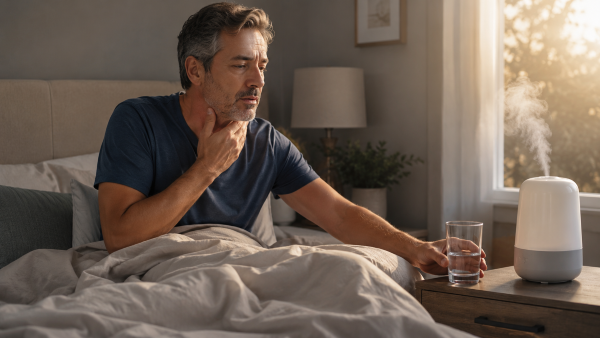
Waking up with dry mouth after 40 is more common than you think. Your mouth feels sticky, your throat is scratchy, and you reach for water before you even sit up. This isn’t just annoying — it’s often a signal that something in your sleep environment, breathing habits, or medication list has shifted as you’ve aged.
The good news: most causes are fixable without major lifestyle overhauls. In this guide, we break down the five most common reasons for dry mouth after 40, how to tell which one is affecting you, and what you can do tonight to wake up feeling more hydrated.
Quick Answer
Dry mouth at night after 40 is most often caused by mouth breathing during sleep, medication side effects, or changes in saliva production. Simple fixes — like adjusting your bedroom humidity, changing sleep position, or reviewing medications with your doctor — can dramatically reduce or eliminate it.
Why Dry Mouth Happens More After 40
As we get older, our bodies produce less saliva on average. Saliva is your mouth’s natural moisturizer and its first line of defense against bacteria. When production drops — a condition called xerostomia — the tissues in your mouth dry out overnight, especially if you sleep with your mouth open.
This effect compounds with other age-related changes: nasal passages can become drier and more congested, medications for blood pressure, anxiety, and allergies often list dry mouth as a side effect, and sleep apnea becomes more common, increasing mouth breathing.
1. Mouth Breathing During Sleep
Mouth breathing is the single most common cause of waking up with a dry mouth. When your nose is congested — from allergies, a cold, or structural issues like a deviated septum — your body automatically switches to mouth breathing at night. Even mild nasal resistance can trigger this shift.
Mouth breathing dries out the palate, tongue, and throat because air passes over moist surfaces without the humidifying and filtering benefits of nasal breathing. Over time, this can lead to chronic bad breath, throat irritation, and even dental issues like cavities and gum inflammation.
What helps: Nasal strips or a gentle saline rinse before bed can open nasal passages. If congestion is persistent, talk to your doctor about allergy testing or a CPAP evaluation if you suspect sleep apnea.
2. Medication Side Effects
Hundreds of common medications list dry mouth as a side effect. The biggest culprits after 40 include antihistamines, certain blood pressure medications (like diuretics), antidepressants, and anxiety medications. If you started a new prescription in the past year and noticed dry mouth shortly after, the two are likely connected.
Some over-the-counter sleep aids and pain relievers also reduce saliva production. Even melatonin, when taken in high doses, can affect sleep architecture in ways that increase mouth breathing.
What helps: Ask your doctor or pharmacist for a medication review. Sometimes switching to a different drug in the same class solves the problem. In the meantime, staying hydrated during the day and using a humidifier at night can reduce symptoms.
3. Sleep Apnea and Snoring
Obstructive sleep apnea (OSA) becomes more prevalent after 40, especially in people who carry extra weight around the neck or have structural jaw issues. OSA causes repeated pauses in breathing throughout the night. Each pause triggers a gasping or snorting response that forces air through the mouth, drying out oral tissues.
Even if you haven’t been diagnosed with sleep apnea, chronic snoring can produce the same mouth-breathing pattern and the same dry-mouth effect.
What helps: If you snore loudly, feel exhausted during the day, or have been told you stop breathing at night, ask your doctor about a sleep study. A CPAP or oral appliance can resolve both apnea and dry mouth.
4. Dehydration and Evening Habits
It sounds obvious, but many adults simply don’t drink enough water during the day. By bedtime, your body is already running at a fluid deficit. Add in evening alcohol, coffee after 2pm, or salty dinner foods, and your mouth pays the price overnight.
Alcohol is a double whammy: it dehydrates you and relaxes the throat muscles, which increases snoring and mouth breathing.
What helps: Aim for most of your daily water intake before 6pm. Cut off alcohol at least three hours before bed. If you need a nighttime drink, keep a small glass of water by the bed rather than chugging a large amount right before lying down.
5. Room Humidity and Temperature
Dry air — whether from air conditioning, heating, or a naturally arid climate — pulls moisture from your skin, nasal passages, and mouth while you sleep. Most people sleep best in a room between 60-67 degrees, but if the air is dry at that temperature, your mouth can still wake up feeling like cotton.
Indoor humidity below 30 percent is considered dry. Most sleep experts recommend keeping bedroom humidity between 40 and 50 percent for comfort and respiratory health.
What helps: A cool-mist humidifier in the bedroom can make a noticeable difference in one or two nights. Clean it weekly to prevent mold and bacteria buildup.
When to See a Doctor
Occasional dry mouth is usually manageable with lifestyle tweaks. But if it’s persistent, severe, or accompanied by extreme thirst, difficulty swallowing, or cracked corners of the mouth, it’s worth a medical evaluation. These can be signs of an underlying condition like Sjögren’s syndrome, diabetes, or neurological changes that need professional care.
Final Thoughts
Waking up with dry mouth after 40 is rarely just one thing. It’s usually a mix of breathing patterns, medication effects, hydration habits, and bedroom air quality. The best approach is to test one change at a time: adjust humidity, review medications, try nasal strips, and track which interventions make the biggest difference.
If you’re also struggling with other age-related sleep issues — like waking up stiff, racing thoughts at bedtime, or chronic insomnia — our related guides on morning stiffness, breathing exercises for sleep, and natural ways to sleep better after 40 can help you build a complete rest routine.
Dry Mouth FAQ
- Can dry mouth at night be a sign of diabetes? Yes. Persistent dry mouth combined with increased thirst, frequent urination, or unexplained weight loss should be checked by a doctor.
- Will a humidifier really help? For most people, yes. Raising bedroom humidity from below 30% to 40-50% often reduces dry mouth within a few nights.
- Is mouth breathing harmful? Long-term mouth breathing can affect dental health, contribute to snoring, and worsen sleep apnea. It’s worth addressing.
- Should I drink water right before bed? A small sip is fine, but chugging a large glass can disrupt sleep with nighttime bathroom trips. Hydrate earlier in the evening instead.
- Can stress cause dry mouth? Indirectly, yes. Stress and anxiety can change breathing patterns and increase mouth breathing, both of which dry out the mouth.
Disclaimer: This article is for informational purposes only and does not constitute medical advice. Always consult with a healthcare professional before making changes to your health routine.