
Best Knee Braces for Everyday Support
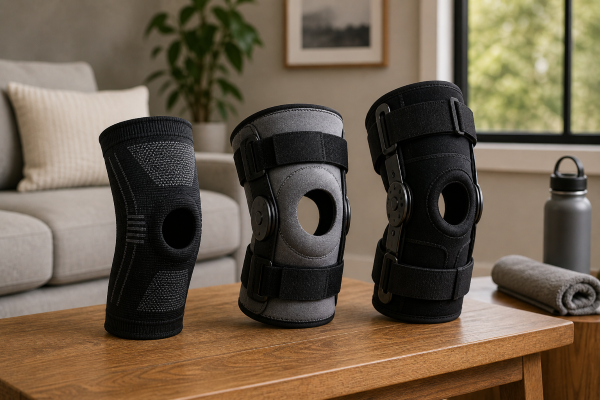
Knee pain after 40 is one of the most common complaints there is. Whether it is a dull ache when you climb stairs, stiffness after sitting too long, or that unsettling feeling that your knee might give out, the right brace can make a real difference in how you move through your day.
The goal when choosing a knee brace is finding the right balance between support and mobility. You want something that stabilizes the joint without being so bulky that it stops you from moving naturally. This guide covers the three main types, which one fits your situation, and how to use one safely.
Why Knee Support Matters More After 40
After 40 the cartilage in your knee joints starts to thin. The tendons and ligaments lose some of their elasticity. The muscles around the knee, especially the quadriceps, weaken without regular strength work. All of this adds up to a joint that is more vulnerable to pain, swelling, and instability.
- Knee pain is often the first sign that the joint is not getting enough support from the surrounding muscles.
- A brace provides external support while your muscles catch up or while you manage an existing condition.
- The right brace keeps you moving. Staying active is one of the best things you can do for long-term knee health.
Related: Simple Morning Stretches for Tight Joints
The 3 Main Types of Knee Braces
1. Best for General Aches and Arthritis: Compression Sleeve
If you deal with general knee achiness, mild swelling, or stiffness that comes and goes a compression sleeve is the best starting point. It provides constant gentle pressure that increases blood flow, keeps the joint warm, and reduces that gelling sensation that makes your knee feel stiff after sitting.
The Pick: NEENCA Professional Knee Compression Sleeve
- Features anatomically contoured patella gel pads and dual-sided metal spring stabilizers.
- Gives more support than a basic fabric sleeve but is thin enough to wear under jeans or work pants.
- One of the most popular options in this category for good reason. It holds up well and stays in place during movement.
Best for: All-day wear, walking, light chores, mild arthritis, general knee aching.

NEENCA Professional Knee Brace, Compression Knee Support with Patella Gel Pad & Side Stabilizers, Medical Knee Sleeve for Pain Relief
Professional Patented Knee Support with Patella Gel Pad & Side Stabilizers, Medical Compression Knee Sleeve with FSA or HSA Eligible, ELITE Knee Brace for Women & Men. BEST CHOICE for Knee Pain Relief and Sports Protection - Day & Night Comfort Wear.
2. Best for Stability and Weak Ligaments: Hinged Knee Brace
If your knee feels like it might give out or buckle when you change direction or carry weight you need more than compression. You need mechanical support. A hinged brace is built for that.
The Pick: Mueller Sports Medicine Hinged Knee Brace
- Metal hinges on the sides prevent lateral side-to-side movement while still allowing your knee to bend and straighten normally.
- Protects the ACL, MCL, and LCL from the kind of stress that causes sprains and strains during activity.
- Bulkier than a sleeve but worth it if stability is your main concern.
Best for: Old knee injuries, ligament weakness, hiking, lifting, any activity where your knee feels unstable.
 10% OFF
MUELLER Sports Medicine Green Self-Adjusting Hinged Knee Brace, Knee Pain Relief Support for Men and Women, Ideal for Arthritis, Sprains, Black, One Size
TARGETED COMPRESSION: Our Green Self-Adjusting Knee Brace is engineered to help prevent medio-lateral (side to side) movement of the knee. Perfect for stabilization and support during activities that exert pressure on the knee
3. Best for Kneecap Pain: Patella Stabilizer Strap
If your pain is located directly behind or around your kneecap, especially when going downstairs or squatting, your kneecap is likely not tracking correctly. A patella strap addresses that specifically without covering the whole knee.
The Pick: Bodyprox Dual Knee Strap
- A minimalist strap that applies targeted pressure to the tendons above and below the kneecap.
- Keeps the patella in its proper tracking position during movement.
- Very low profile and much cooler than a full sleeve. Good for people who find sleeves too hot or restrictive.
Best for: Runner’s knee, patellar tendonitis, kneecap pain going up or down stairs.

Bodyprox Patella Tendon Knee Strap 2 Pack, Knee Pain Relief Support Brace Hiking, Soccer, Basketball, Running, Jumpers Knee, Tennis, Tendonitis, Volleyball & Squats
ADJUSTABLE STRAP can make adjustment according personal knee’s curves to supply better protection of patella; It is fully adjustable, fit 13 to 18 inches (Knee Circumference).
Which Level of Support Do You Need?
| Type | Support Level | Best Usage | Bulkiness |
| Compression Sleeve | Mild | Daily walking, light chores, mild arthritis | Low. Invisible under most clothing. |
| Patella Strap | Moderate | Stair climbing, kneecap pain, running | Very low. Just a strap. |
| Hinged Brace | High | Hiking, lifting, old injuries, instability | High. Visible under clothing. |
What to Look for When Buying
- Correct sizing. Measure the circumference of your knee and check the sizing chart before you order. A brace that is too small restricts circulation. Too large and it slides down and does nothing.
- Material. Neoprene is warm and supportive but traps heat. Knit fabric sleeves breathe better for all-day wear. Choose based on how long you plan to wear it.
- Patella opening. Many sleeves have a hole over the kneecap. This reduces pressure on the kneecap itself and is worth having if kneecap pain is part of your issue.
- Non-slip grip. Silicone grip strips inside the brace keep it from sliding down during activity. Check for this feature especially on sleeves.
- Washability. You will be sweating into this thing. Make sure it is machine washable or easy to hand wash.
3 Tips for Wearing a Knee Brace Safely
- Do not over-rely on it. A brace is a tool not a crutch. Use it during your most active hours or when you need it most. But spend some time without it too. Your supporting muscles need to stay active and strong. If you wear a brace every waking hour those muscles can weaken over time.
- Check the fit regularly. If you notice numbness in your foot, tingling, or deep red marks on your skin the brace is too tight. It should feel like a firm hug not a tourniquet. Swelling can also change the fit throughout the day so check it morning and afternoon.
- Keep it clean. Sweat and skin cells build up fast in neoprene and fabric braces. Wash yours at least once a week. Letting it go too long leads to skin irritation, odor, and a condition sometimes called brace rash. Most braces can be hand washed with mild soap and air dried.
Pair Your Brace With These Habits
A brace helps but it works best alongside a few supporting habits.
- Strengthen your quads. The quadriceps are the primary support system for your knee. Seated leg extensions, wall sits, and step-ups are simple exercises that build the muscle your knee needs to stay stable.
- Stretch your hamstrings and hip flexors. Tight muscles above and below the knee pull on the joint and cause pain. A few minutes of stretching daily reduces that tension significantly.
- Use heat before activity. A few minutes of heat on the knee before you put it to work gets blood flowing and loosens the joint. Related: Best Heating Pads for Back Pain Relief
- Use ice after activity. If your knee swells or aches after activity ice for 15 minutes helps reduce inflammation. This is one time where cold beats heat.
- Keep moving. Light daily walking keeps the joint lubricated and prevents the stiffness that comes from inactivity. Related: How to Stay Active After 40 Without Overdoing It
When to See a Doctor
A knee brace helps manage symptoms but it does not fix underlying problems. See a doctor if:
- Your knee is significantly swollen, warm, or red.
- You heard or felt a pop when the pain started.
- Your knee buckles or gives out regularly.
- The pain is getting worse over time not better.
- You cannot put weight on it comfortably.
These are signs of something that needs a proper diagnosis. A doctor or physical therapist can also recommend the right brace for your specific condition.
Bottom Line
For most adults over 40 dealing with general knee pain and stiffness the NEENCA compression sleeve is the best place to start. It is comfortable enough for all-day wear, gives real support, and works under regular clothing. If your knee feels unstable step up to the Mueller hinged brace. If your pain is specifically around the kneecap the Bodyprox patella strap is a simple and effective fix.
A good brace keeps you moving. And staying moving is the best thing you can do for your knees long term.
Related Articles
- Why You Wake Up Stiff and What to Do About It
- Simple Morning Stretches for Tight Joints
- Best Heating Pads for Back Pain Relief
- How to Stay Active After 40 Without Overdoing It
- Best Foam Rollers for Sore Muscles
This content is for informational purposes only and is not medical advice. Some links on this page may be affiliate links. If you click and buy I may earn a commission at no extra cost to you. I only recommend products I believe are worth considering.