
Simple Morning Stretches for Tight Joints
If you wake up feeling stiff and slow every morning you are not broken. Your joints just need a few minutes to get lubricated and moving again. After 40 that warm up period gets more important. The good news is that 5 to 10 minutes of simple stretching in the morning can completely change how the rest of your day feels.
No gym. No equipment. No complicated routine. Just a few easy movements you can do right where you are.
Why Morning Stretching Matters More After 40
When you sleep your joints stop moving for hours. The synovial fluid that keeps them lubricated thickens up when it sits still. Your fascia, the connective tissue around your muscles, also tightens up overnight. The result is that familiar stiff and creaky feeling when you first try to move.
After 40 your body produces less synovial fluid and your connective tissue loses some flexibility. That means the stiffness gets worse if you ignore it and better when you address it consistently.
Morning stretching works by doing three things at once. It gets joint fluid moving. It lengthens tight muscles. And it signals your nervous system to shift out of rest mode and into an active state. You feel more alert and more comfortable within minutes.
Related: Why You Wake Up Stiff and What to Do About It
Before You Start
- Drink water first. Your fascia is about 70 percent water. Even mild dehydration makes tissue tighter and less flexible. Have a glass of water before you start.
- Do not push through sharp pain. Mild tension is normal. Sharp or stabbing pain is a signal to stop.
- Breathe through every stretch. Holding your breath tightens your muscles. Slow steady breathing helps them relax.
- Extra stiff days? Try heat first. A warm shower or a few minutes with a heating pad before stretching makes everything easier and more effective.
The Morning Stretch Routine
Start with the in-bed stretches before you even get up. Then move to the floor or standing stretches once you are on your feet. The whole routine takes about 7 to 10 minutes.
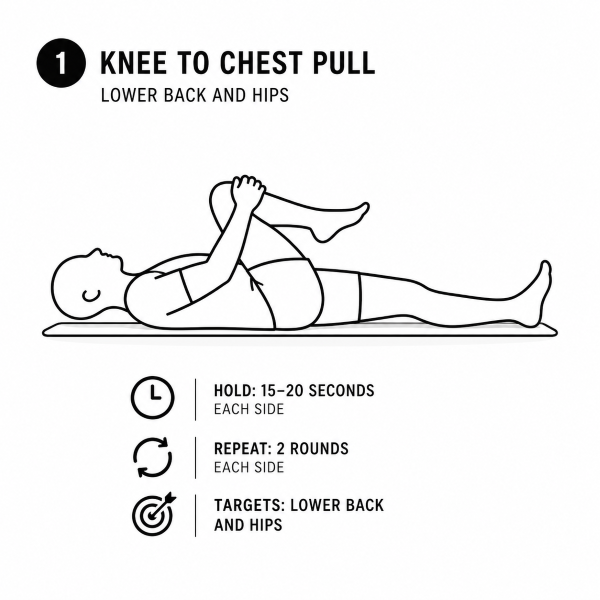
1. Knee to Chest Pull (Lower Back and Hips)
Do this one while still lying on your back in bed.
- Pull one knee up toward your chest and hold it gently with both hands.
- Hold for 15 to 20 seconds. You should feel a gentle stretch in your lower back and glute.
- Switch legs and repeat.
- Do 2 rounds on each side.
Why it helps: Your spine compresses slightly overnight. This stretch gently decompresses the lower back and wakes up the hip joint before you put weight on it.
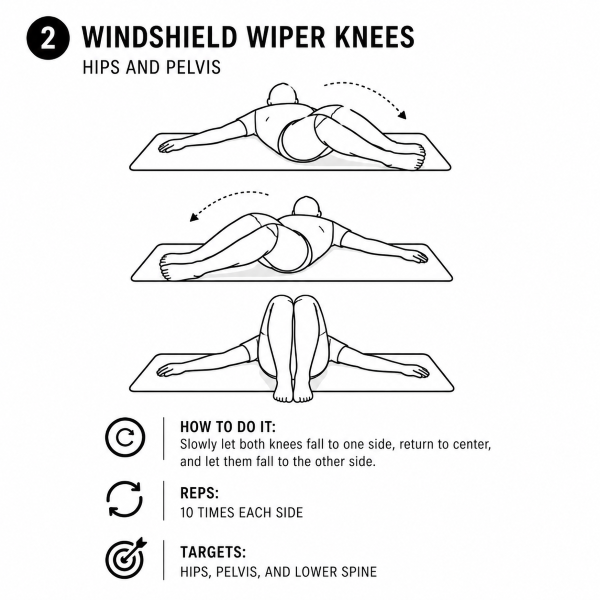
2. Windshield Wiper Knees (Hips and Pelvis)
Still lying on your back with knees bent and feet flat on the mattress.
- Slowly let both knees fall together to the right side.
- Bring them back to center then let them fall to the left.
- Do this 10 times each side in a slow steady rhythm.
Why it helps: This rotates your hip sockets and gets the synovial fluid moving in the pelvis and lower spine. It is one of the best joint-lubricating movements you can do first thing in the morning.
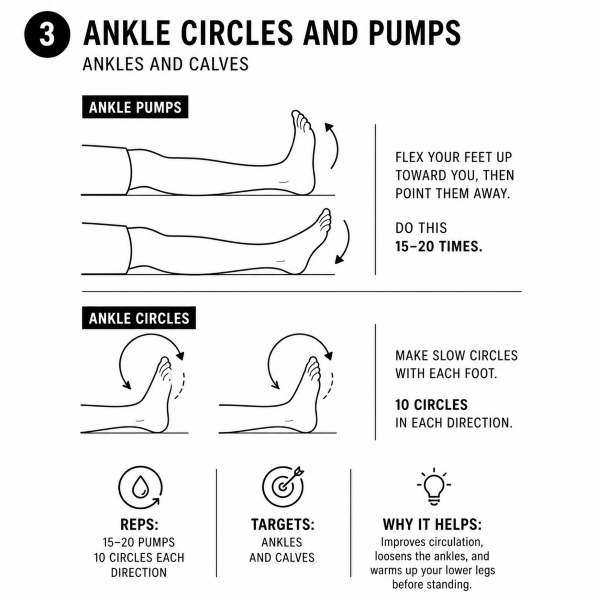
3. Ankle Circles and Pumps (Ankles and Calves)
Still in bed, legs straight.
- Flex your feet up toward you then point them away. Do this 15 to 20 times.
- Then make slow circles with each foot. 10 circles in each direction.
Why it helps: Your circulation slows during sleep. This gets blood moving from your lower legs back toward your heart and warms up your ankles before you stand on them.
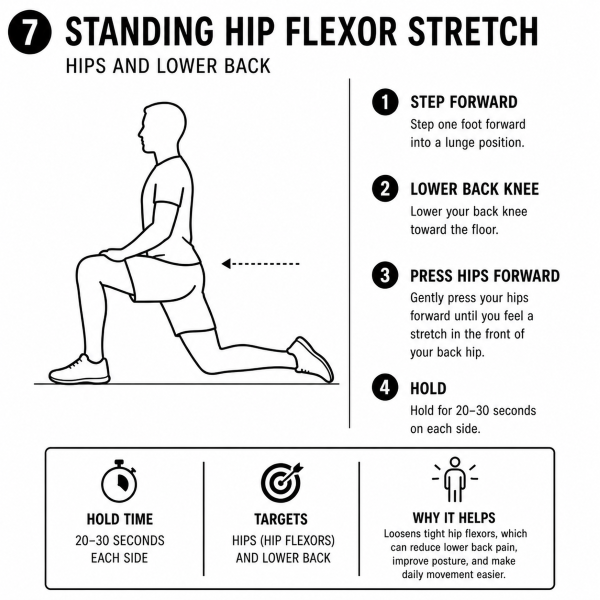
4. Cat-Cow (Spine and Core)
Move to the floor or do this on a firm mattress on all fours.
- Start on hands and knees with your back flat.
- Inhale and let your belly drop toward the floor while you look up slightly. This is the Cow position.
- Exhale and round your back up toward the ceiling while tucking your chin to your chest. This is the Cat position.
- Move slowly between the two. Do 8 to 10 rounds.
Why it helps: This is the single best movement for waking up the spine. It moves every vertebra through its full range of motion and activates the muscles around your core.
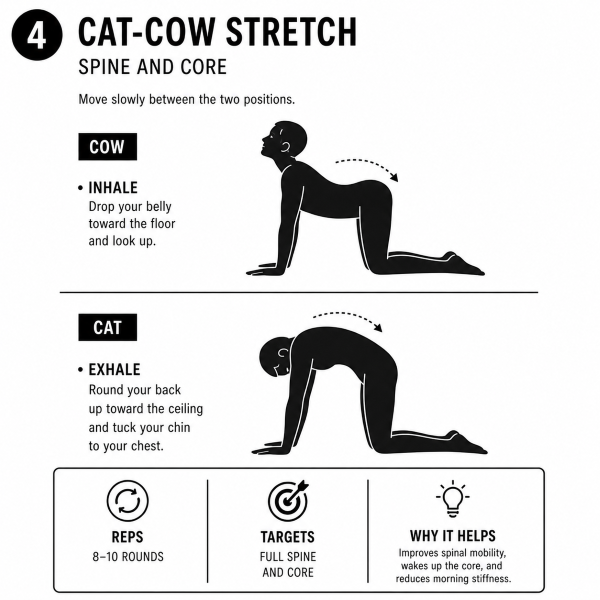
5. Doorway Chest Stretch (Shoulders and Posture)
Stand in any doorway in your home.
- Place your forearms on the door frame with elbows at shoulder height.
- Step one foot forward and gently lean into the doorway until you feel a stretch across your chest and the front of your shoulders.
- Hold for 20 to 30 seconds.
Why it helps: Most people curl inward while they sleep. This opens the chest, pulls the shoulders back, and counteracts hours of compressed sleeping posture. It also makes you stand taller right away.
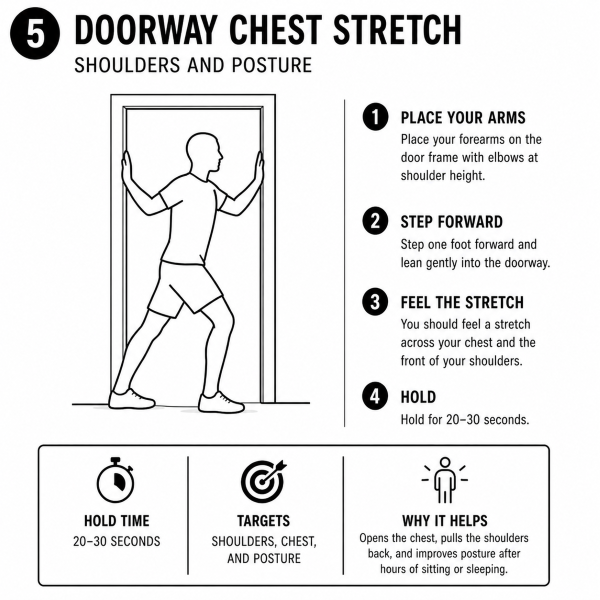
6. Standing Quad Stretch (Knees and Thighs)
Stand near a wall or hold the doorframe for balance.
- Bend one knee and reach back to grab your ankle.
- Pull your heel toward your glute while keeping your knees close together.
- Stand tall and hold for 20 to 30 seconds per side.
Why it helps: Tight quads pull on your kneecap and are a major cause of morning knee pain. Releasing that tension takes pressure off the knee joint before you start walking around.
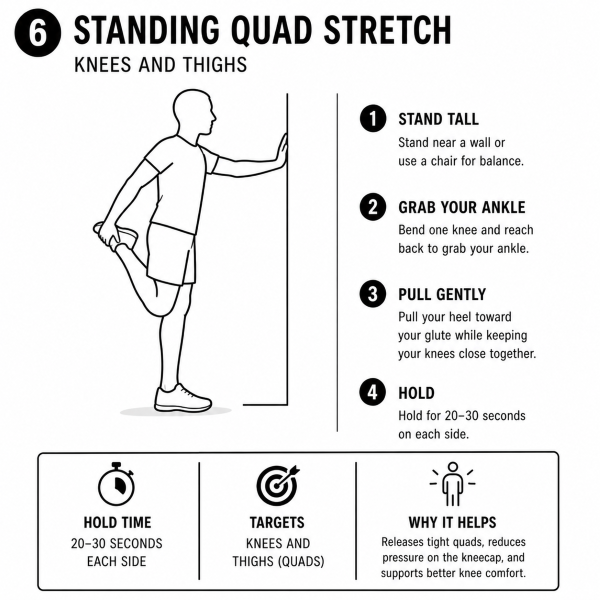
7. Standing Hip Flexor Stretch (Hips and Lower Back)
This is especially important if you sit a lot during the day.
- Step one foot forward into a gentle lunge position.
- Lower your back knee toward the floor. Keep your front knee over your ankle.
- Gently press your hips forward until you feel a stretch in the front of your back hip.
- Hold 20 to 30 seconds each side.
Why it helps: Tight hip flexors are one of the most common causes of lower back pain and poor posture after 40. Stretching them first thing in the morning makes a big difference in how you feel all day.
Morning Stretch Quick Reference
| Stretch | Target Area | Time |
| Knee to Chest Pull | Lower back and hips | 15-20 sec each side |
| Windshield Wiper Knees | Hips and pelvis | 10 reps each side |
| Ankle Circles and Pumps | Ankles and calves | 15-20 reps |
| Cat-Cow | Full spine and core | 8-10 rounds |
| Doorway Chest Stretch | Shoulders and posture | 20-30 seconds |
| Standing Quad Stretch | Knees and thighs | 20-30 sec each side |
| Hip Flexor Stretch | Hips and lower back | 20-30 sec each side |
Tips for Sticking With It
- Stack it onto something you already do. Do the in-bed stretches right after your alarm goes off before you check your phone. Do the standing stretches while your coffee brews.
- Start with just 3 stretches. You do not have to do all 7 right away. Start with the knee to chest, windshield wipers, and cat-cow. Add more as it becomes a habit.
- Use heat on really stiff days. A quick warm shower before you stretch makes everything looser and easier. Or use a heating pad on your lower back for a few minutes first.
- Be consistent. The biggest benefit comes from doing this every morning. Even on days when you feel fine. Regular movement keeps the stiffness from building back up.
What If Stretching Hurts?
Mild discomfort and tension during a stretch is normal. Sharp pain is not. Here is how to tell the difference.
- A dull pulling sensation in the muscle being stretched is normal. That is the stretch working.
- Sharp, stabbing, or shooting pain means stop immediately.
- Pain in a joint rather than a muscle during a stretch is a signal to back off and talk to a doctor.
- If you have a known injury or joint condition get cleared by your doctor before starting any new stretching routine.
Tools That Make It Easier
You do not need anything to do these stretches. But a couple of simple tools can help on days when you are extra stiff.
- Heating pad: A few minutes of heat on your lower back or hips before stretching loosens everything up faster. Related: Best Heating Pads for Back Pain Relief
- Foam roller: Rolling out your back, hips, and legs before or after stretching helps break up tight spots in the fascia. Related: Best Foam Rollers for Sore Muscles
- Body pillow or knee pillow: Using a pillow between your knees at night keeps your hips aligned so you wake up less stiff in the first place. Related: Best Pillows for Neck and Shoulder Pain
Make It a Habit
You will feel a difference after the first morning. But the real benefit builds over time. A few minutes of stretching every morning consistently is one of the simplest things you can do to protect your joints and feel better as you get older.
Start with the first three in-bed stretches tomorrow morning. That is it. Just those three. Build from there.
Related Articles
- Why You Wake Up Stiff and What to Do About It
- Best Heating Pads for Back Pain Relief
- Best Foam Rollers for Sore Muscles
- How to Stay Active After 40 Without Overdoing It
- How to Sleep Better Naturally After 40
This content is for informational purposes only and is not medical advice. Always speak with a qualified healthcare professional before starting a new exercise routine especially if you have a known injury or joint condition.