
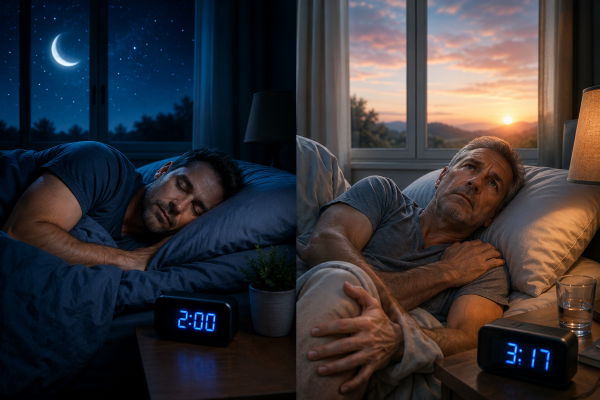
Yes: Sleep Patterns Do Change With Age
Sleep patterns change because your body’s internal clock, hormone production, and physical needs shift over time. After 40, many adults notice earlier bedtimes, lighter sleep, and more frequent awakenings. These changes are partly normal, but they can also be worsened by stress, poor sleep habits, pain, and health conditions. The goal is not to return to the sleep of your 20s — it is to optimize the sleep you need now.
If you feel like you slept better in your 20s and 30s than you do now, you’re not imagining it. Many adults notice they wake up more often, sleep lighter, and feel less rested after age 40. The good news is that understanding why sleep changes with age can help you improve the quality of the sleep you get. Genetics, hormones, lifestyle habits, health conditions, and environmental factors all play a role. This guide explains what is normal, what is not, and how to protect your rest after 40.
Why You Wake Up More Often After 40
Waking up during the night becomes more common after 40, and it is rarely caused by a single factor. Your sleep naturally becomes lighter, making it easier to rouse from noise, discomfort, bathroom trips, or racing thoughts. Stress, cortisol, joint pain, and changes in melatonin all contribute. Even small disruptions can add up, reducing total sleep time and leaving you tired the next day.
For many adults, 3 AM becomes a regular wake-up time. This is often tied to cortisol spikes, anxiety, or physical discomfort. If this sounds familiar, you are not alone — and there are ways to address it. For more on this common problem, see Why Do I Wake Up at 3 AM Every Night After 40? and Why Do I Wake Up Between 2 AM and 4 AM Every Night?.
What wakes you up
Common nighttime awakenings after 40 include bathroom trips, joint pain, hot flashes, snoring or breathing pauses, stress, and noise. Identifying your pattern is the first step. Keep a simple sleep log for a week to track when you wake and what might have preceded it.
How to reduce awakenings
Consistent habits help. Stick to a sleep schedule, limit fluids before bed, manage pain, reduce caffeine and alcohol, and create a cool, dark, quiet environment. If racing thoughts are the culprit, a brief wind-down routine can help your nervous system shift into rest mode before you get into bed.
How Sleep Architecture Changes With Age
Sleep is divided into stages: light sleep, deep sleep, and REM sleep. Each stage serves a different purpose, from physical repair to memory consolidation. As you age, the balance of these stages shifts.
Less deep sleep
Deep sleep, also called slow-wave sleep, is the most physically restorative stage. It declines significantly after age 40. Less deep sleep means slower tissue repair, reduced immune function, and less energy restoration. It also makes sleep more susceptible to disruption from noise, pain, or racing thoughts.
Changes in REM sleep
REM sleep, which supports memory and emotional regulation, also shifts with age. Some adults experience less REM sleep or more fragmented REM cycles. This can contribute to mood changes, brain fog, and feeling unrested even after a full night.
Earlier sleep timing
Many adults over 40 notice themselves getting tired earlier in the evening and waking up earlier in the morning. This is partly driven by changes in melatonin production and circadian rhythm. Known as advanced sleep phase syndrome, it is a normal part of aging for many people.
Why Joint Pain Can Affect Sleep Quality
Pain disrupts sleep, and poor sleep worsens pain perception. This bidirectional relationship is especially common after 40. Arthritis, bursitis, back pain, and general stiffness can wake you up or prevent deep sleep. If you find yourself adjusting positions all night or waking up sore, your joints may be sabotaging your rest.
Addressing pain proactively is one of the most effective ways to improve sleep quality. Gentle evening stretching, heat therapy, and a supportive mattress or pillow can reduce nighttime awakenings. For more on the connection between sleep and joint health, see Can Lack of Sleep Make Joint Pain Worse? and What Are the Best Natural Remedies for Joint Pain After 40?.
Hormones, Stress, and Sleep After 40
Hormonal shifts are a major driver of sleep changes. For women, perimenopause and menopause bring hot flashes, night sweats, and fluctuating estrogen and progesterone, which disrupt sleep onset and sleep continuity. For men, declining testosterone can reduce sleep quality and increase fatigue. At the same time, stress often peaks in midlife, raising cortisol and interfering with melatonin production. The combination can make sleep feel increasingly elusive after 40.
Lifestyle and Environmental Factors
Lifestyle habits accumulated over decades also shape sleep patterns. Caffeine tolerance, alcohol use, screen habits, exercise routines, and stress management all influence how well you sleep after 40. Small, consistent adjustments to these habits can offset some of the natural sleep changes that come with age.
Caffeine and alcohol
Caffeine blocks adenosine, a chemical that builds sleep pressure. Even one afternoon coffee can affect sleep quality for hours in some adults. Alcohol may help you relax initially, but it disrupts deep sleep and REM later in the night, leaving you tired in the morning.
Exercise and movement
Regular exercise supports deeper sleep and reduces insomnia risk, but the timing matters. Intense exercise too close to bed can raise core temperature and cortisol, delaying sleep onset. Earlier movement — even a 20-minute walk — tends to support better nighttime rest.
Screen exposure and light habits
Artificial light, especially blue light from screens, suppresses melatonin and shifts your circadian rhythm later. Over time, this can make it harder to fall asleep at your desired time and reduce overall sleep quality. Reducing screen exposure in the evening and getting morning sunlight are two of the simplest ways to support a healthier sleep pattern.
When Should You Talk to a Doctor?
Many sleep changes after 40 are manageable with lifestyle adjustments, but some symptoms warrant medical evaluation. Do not ignore persistent sleep problems that affect your daily life.
Sleep apnea
Loud snoring, gasping at night, and severe daytime sleepiness are red flags for sleep apnea. This condition is more common after 40 and increases risks for heart disease, high blood pressure, and diabetes. A sleep study can diagnose it, and treatments such as CPAP often lead to dramatic improvements.
Severe insomnia
If you regularly struggle to fall asleep, stay asleep, or wake up too early — and it affects your mood, energy, or work — you may have chronic insomnia. Cognitive Behavioral Therapy for Insomnia (CBT-I) is highly effective and does not require medication.
Restless legs
Restless legs syndrome causes uncomfortable sensations in the legs and an urge to move them, especially at night. It can severely disrupt sleep and is often underdiagnosed. A healthcare provider can screen for it and recommend treatments ranging from lifestyle changes to medication.
Chronic fatigue
Persistent exhaustion that does not improve with more sleep can signal an underlying condition such as thyroid disorders, anemia, depression, or autoimmune disease. If you are sleeping enough but still feel drained, a medical evaluation is important.
How to Support Healthy Sleep Patterns After 40
You cannot reverse the natural aging process, but you can create conditions that support the best possible sleep for your current stage of life. Focus on consistency, environment, and addressing specific disruptors.
1. Keep a consistent sleep schedule
Waking up and going to bed at the same time every day stabilizes your circadian rhythm. Consistency reduces sleep onset latency and improves deep sleep over time. Even weekend schedule shifts of more than an hour can disrupt your rhythm.
2. Optimize your sleep environment
Keep your bedroom cool, dark, and quiet. Use blackout curtains, a white noise machine, and ensure your mattress and pillow support your joints and spine. If you wake up stiff, your sleep position and bedding may need adjustment. For tips, see Simple Morning Stretches for Tight Joints.
3. Get morning sunlight
Natural light in the morning anchors your circadian rhythm and helps you fall asleep more easily at night. Open the curtains as soon as you wake or step outside for a few minutes.
4. Address pain and discomfort
If joint pain or stiffness interrupts sleep, treat it as part of your sleep strategy. Gentle evening stretching, a warm shower, or a supportive pillow can reduce nighttime awakenings. For joint-specific guidance, see Morning Stiffness vs Arthritis: What’s the Difference?.
5. Manage stress throughout the day
Daily stress management — movement, breathing exercises, journaling, or talking through worries — reduces the mental load you carry into bed. For additional strategies, see How to Sleep Better Naturally After 40.
Frequently Asked Questions
Why do sleep patterns change after age 40?
Hormonal shifts, reduced melatonin, lighter sleep stages, increased awakenings, lifestyle habits, and higher rates of health conditions that interfere with rest all contribute to changing sleep patterns after 40.
Is it normal to wake up more often as you get older?
Yes, more frequent awakenings are common after 40 because deep sleep declines and sleep becomes more easily disrupted. That said, severe or persistent fragmentation should be evaluated.
Why do older adults wake up earlier?
Advanced sleep phase syndrome becomes more common with age. Reduced melatonin production and circadian rhythm shifts often lead to earlier bedtimes and earlier wake times.
Can hormones affect sleep after 40?
Yes. Fluctuating estrogen and progesterone during perimenopause and menopause, as well as declining testosterone in men, are major contributors to sleep disruption after 40.
How much sleep do adults over 40 need?
Most adults over 40 still need 7 to 8 hours of quality sleep per night. Individual needs vary, but consistently sleeping less than 6 hours is linked to worsened health, mood, and cognitive function.
Links to Explore
For more guidance on sleep, joint health, and healthy aging after 40, explore these related articles on HealthWellnessWay.com.