
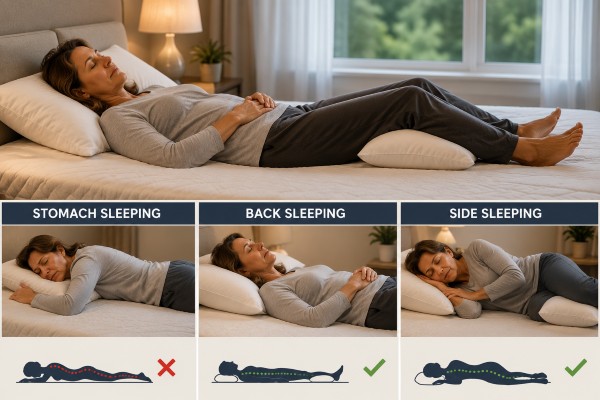
Yes, sleep position can contribute to morning stiffness and pain. Poor sleeping posture may place extra pressure on the neck, shoulders, hips, and lower back, leading to stiffness when you wake up. Adjusting your sleep position and pillow support may help reduce discomfort and improve sleep quality.
Stomach Sleeping
Sleeping on your stomach forces your neck to twist for hours, straining the cervical spine. It also flattens the natural curve in your lower back, which can lead to morning back stiffness. If you can, avoid stomach sleeping entirely.
Back Sleeping
Back sleeping is generally best for spinal alignment and joint health. To support it: use a medium-thickness pillow that keeps your neck neutral; place a small pillow under your knees to reduce lower-back pressure; choose a supportive mattress that doesn’t sink too deeply.
Side Sleeping
Side sleeping is common, but it can cause shoulder and hip stiffness if not properly supported: use a firmer pillow that keeps your head aligned with your spine; place a pillow between your knees to keep hips and pelvis aligned; alternate sides so one shoulder doesn’t take all the pressure.
Pillow Type Matters
Memory foam, latex, and adjustable-fill pillows each have pros. Memory foam contours but can trap heat. Latex is responsive and cooler. Adjustable pillows let you customize height, which is helpful for neck stiffness. Change pillows every 1-2 years.
👉 Why Do I Wake Up Stiff Every Morning After 40?
Mattress and Support
If your mattress sags or is more than 8-10 years old, it may be contributing to morning stiffness. A medium-firm mattress generally supports joints best for adults over 40. Mattress toppers can help extend comfort on an older bed.
👉 How to Loosen Stiff Joints in the Morning After 40
Morning Stretching After Sleep
A few minutes of gentle movement can help reduce stiffness after getting out of bed. Simple neck rolls, shoulder circles, hip stretches, and short walks may improve circulation and help joints feel more comfortable.
👉 Simple Morning Stretches for Tight Joints
Quick Fixes Tonight
- Switch to sleeping on your back or side, not your stomach
- Add a pillow between your knees if you sleep on your side
- Use a pillow that keeps your neck in a neutral line with your spine
When Pain Persists
If you still wake up stiff after adjusting sleep position, the cause may be deeper joint issues, inflammation, or sleep apnea. See a doctor if stiffness lasts more than an hour or gets worse over time.
Frequently Asked Questions
Can sleeping position cause morning stiffness?
Yes. Poor sleep posture may place stress on joints and muscles, contributing to stiffness and discomfort when you wake up.
What is the best sleep position for joint pain?
For many adults, back sleeping with proper support or side sleeping with a pillow between the knees provides the best joint alignment.
Can the wrong pillow cause neck stiffness?
Yes. A pillow that is too high or too flat may place the neck in an awkward position for several hours.
Why do I wake up with shoulder pain when sleeping on my side?
Side sleeping can place pressure on the shoulder joint, especially if the mattress or pillow does not provide adequate support.
Related: Smart sleep positioning pairs well with joint-support strategies — our supplements guide covers what the research says. For the full overview, read our main guide to morning stiffness after 40.