
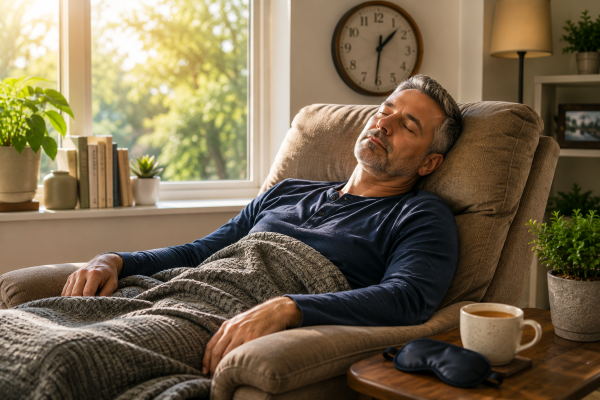
If you find yourself napping more often after 40—or wondering whether you should—you are not alone. Napping becomes a more common part of daily life for many adults as nighttime sleep grows lighter and more fragmented. The question is not whether napping is inherently good or bad, but whether your specific nap habits are helping or hurting your overall sleep. This guide covers the benefits and risks of napping after 40, how long and when to nap for the best results, and when a nap might actually be a warning sign of an underlying sleep problem.
Quick Answer: Napping After 40 Can Be Helpful—If Done Right
“A well-timed nap can restore alertness, improve mood, and support learning without harming nighttime sleep.. A poorly timed or overly long nap, especially after 3 PM, can interfere with your sleep drive and make insomnia worse. The key variables are duration, timing, and reason. Understanding those three factors lets you use napping strategically rather than accidentally sabotaging your nighttime rest.
Why Napping Becomes More Common After 40
As sleep patterns change after 40, many adults notice themselves getting tired earlier in the afternoon. This is partly normal—deep sleep naturally declines with age, leaving less restorative rest overnight and creating a greater daytime sleep deficit. Lifestyle factors also play a role: busy schedules, early wake times, and stress can all create an afternoon energy gap.
Napping is also more common in adults who sleep more lightly at night. If you are not getting enough deep sleep, your body naturally craves compensation during the day. This is one reason napping is especially prevalent in the Better Sleep After 40 demographic. Rather than suppressing naps outright, it is more useful to understand which types of naps help and which hurt.
Benefits of Napping After 40
Naps are not a sign of weakness or poor nighttime sleep. Research supports several legitimate benefits—especially for adults over 40.
Improved alertness and reaction time
Even a 10-minute nap can measurably improve cognitive performance, reaction time, and alertness for two to three hours afterward. This makes napping especially useful for tasks requiring focus—driving, operating machinery, or attending afternoon meetings. Studies show that naps can be more effective than caffeine for counteracting the 2 PM to 4 PM energy dip without the jittery aftereffects.
Better mood and emotional regulation
Sleep deprivation amplifies negative emotions and reduces patience. A short nap can restore emotional balance and reduce irritability in the afternoon—something especially valuable for adults juggling work, family, and caregiving responsibilities.
Memory consolidation and learning
Naps support memory consolidation, the process by which short-term memories are transferred to long-term storage. A 45 to 60-minute nap that includes some deep sleep can improve procedural memory and learning. This makes midday napping a practical tool for adults who are learning new skills or managing complex information.
Heart health benefits
Research from the American College of Cardiology has associated occasional napping with reduced blood pressure and lower risk of heart events. The effect is particularly notable in adults who get insufficient nighttime sleep. While napping is not a replacement for good nighttime sleep, it can provide meaningful cardiovascular protection as a supplement.
Risks of Napping After 40
Naps are not universally beneficial. The timing, length, and reason for your nap determine whether it helps or hurts.
Sleep inertia and overly long naps
Naps longer than 30 minutes often push you into deep sleep. Waking from deep sleep causes sleep inertia—a period of grogginess, disorientation, and worse cognitive performance that can last 30 minutes to an hour. After 40, sleep inertia tends to be more intense and last longer because deep sleep is already reduced at night and more disruptive to interrupt.
Nighttime sleep interference
Napping reduces your sleep drive—the biological pressure to sleep that builds the longer you stay awake. After 3 PM, naps begin to compete with your natural circadian drive toward nighttime sleep. After 4 PM, napping becomes increasingly likely to delay sleep onset and fragment nighttime rest. If you struggle with insomnia after 40, late-afternoon napping can make it significantly worse. For more on understanding and treating insomnia, see Insomnia After 40: Why It Happens and What Actually Helps.
Using naps to avoid addressing real sleep problems
If you are napping habitually to cover up exhaustion, that exhaustion may be a symptom of an underlying condition. Sleep apnea, chronic pain, hormonal shifts, and stress all degrade nighttime sleep and create a persistent daytime sleepiness that napping only temporarily masks. Frequent exhaustion despite napping deserves a medical conversation. Learn more about persistent tiredness at Why Am I Tired After 8 Hours of Sleep?.
The Right Way to Nap After 40
Here are the key guidelines for naps that actually help after 40.
Timing: nap before 2 PM
The sweet spot for napping is between 1 PM and 2 PM. At this time, your circadian rhythm naturally dips after lunch, and a short nap aligns with your body’s inclination rather than fighting it. Napping before 2 PM is unlikely to interfere with nighttime sleep for most people.
Duration: 10 to 20 minutes for alertness, 45 minutes for memory
Aim for 10 to 20 minutes if your goal is alertness and mood without grogginess. If you want memory benefits and can tolerate waking slightly groggy, 45 to 60 minutes gets you into the deep sleep portion of a nap cycle. Avoid 90-minute nap sessions—these are full sleep cycles that can leave you deeply groggy upon waking.
Environment matters
Napping in a dark, cool, quiet environment produces better results than napping on the couch with the TV on. Even 20 minutes of high-quality rest is more restorative than an hour of fragmented napping in a distracting environment. If you nap at work, bring an eye mask, noise-cancelling headphones, and find a dark or dim space.
Caffeine timing and naps
Some people use a “nappuccino”—drinking a small coffee right before a 20-minute nap. By the time the nap ends and you wake up, the caffeine is just starting to take effect, giving you a double alertness boost. This only works if the nap is short enough that you do not enter deep sleep and if you can nap without caffeine interfering with nighttime sleep. Avoid this technique after 2 PM.
When Napping Could Signal a Problem
Napping becomes concerning when it is no longer a choice but a necessity—when you cannot get through the day without one, or when a nap does not leave you feeling refreshed. This pattern can point to sleep apnea, chronic insomnia, anemia, thyroid issues, or other conditions that degrade nighttime sleep quality. If this sounds familiar, see Why Is My Sleep Worse After Age 50? for more on age-related sleep changes and when to seek evaluation.
Frequently Asked Questions
How long should a nap be after 40?
For alertness, 10 to 20 minutes is ideal. For memory benefits, 45 to 60 minutes works. Avoid naps over 90 minutes unless they align with a full sleep cycle and are timed well before bedtime. Most adults over 40 benefit from keeping naps under 30 minutes.
Is napping bad for nighttime sleep?
Short naps before 2 PM generally do not harm nighttime sleep. Naps after 3 PM, especially long ones, can delay sleep onset and reduce deep sleep at night. The effect varies by individual—people with chronic insomnia should avoid napping altogether until their nighttime sleep improves.
Why do I feel groggy after napping?
Grogginess after napping—sleep inertia—usually means you napped too long and woke from deep sleep. Keep naps to 20 minutes to avoid this. Waking from light sleep leaves you feeling clear and alert rather than groggy.
Can napping help with stress?
Yes. Short naps reduce cortisol and improve emotional regulation. A 20-minute nap can reduce afternoon stress and make it easier to manage the rest of your day without overreacting to stressors.
Is daily napping healthy after 40?
Daily short naps (10 to 20 minutes before 2 PM) can be healthy if your nighttime sleep is adequate. If you need daily long naps to function, it may indicate your nighttime sleep is not restorative and deserves evaluation.
5 Internal Links to Explore
For more on sleep quality, stress, and healthy daily habits after 40, explore these related articles on HealthWellnessWay.com.