
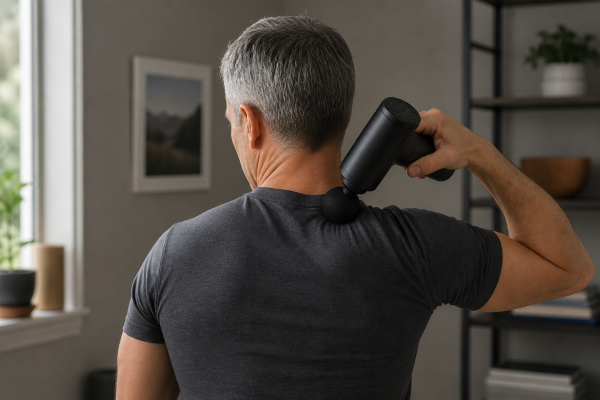
Everyday aches, tight muscles, and stiffness are some of the most common complaints after 40. Whether it comes from work, staying active, long hours on your feet, or just the way your body recovers now, the right massage tool can make a real difference in how you feel day to day.
You do not need a professional appointment or an expensive setup. A few simple tools used consistently at home can ease tension, improve circulation, and help your body recover faster between activities.
Why Massage Matters More After 40
After 40 your fascia, the connective tissue that surrounds your muscles, becomes less elastic and more prone to tightening up. Muscle recovery slows down. Tension that used to work itself out overnight starts to build and stick around. Regular massage work directly addresses this by breaking up adhesions in tight tissue, stimulating blood flow, and helping muscles stay looser between activity.
- Loosens tight muscles and reduces stiffness
- Improves blood flow and circulation to sore areas
- Supports faster recovery after walking, exercise, or a long day
- Helps your body relax and unwind before bed
- Keeps joints moving more freely over time
Related: Best Foam Rollers for Sore Muscles
Massage Guns
Massage guns use rapid percussion to reach deep into muscle tissue. They are one of the fastest ways to break up knots and reduce soreness after activity. The vibration numbs pain receptors slightly which lets you work deeper into tight spots than you could with a foam roller or your hands alone.
- Best for: Back, legs, shoulders, and larger muscle groups
- Look for: Multiple speed settings, quiet motor, and attachments for different areas
- Avoid: Using directly on joints, spine, or bony areas
- Start on the lowest setting until you know how your muscles respond
Related: The Best Massage Guns of 2026 for Longevity and Mobility
Foam Rollers
Foam rollers are one of the most effective and affordable recovery tools available. By using your own body weight as pressure you release tension in the fascia and improve circulation in large muscle groups. Ten minutes of rolling after activity cuts soreness significantly and keeps your muscles looser day to day.
- Best for: Legs, hips, IT band, upper back, and calves
- Smooth rollers are best for beginners and sensitive muscles
- Textured rollers go deeper and target specific knots
- Drink a full glass of water after rolling to flush out released waste
See our full guide: Best Foam Rollers for Sore Muscles
Massage Balls
Massage balls are simple, cheap, and surprisingly effective for targeting small tight spots that a foam roller cannot reach precisely enough. You can use them against a wall or on the floor and control exactly how much pressure you apply.
- Best for: Shoulders, upper back, glutes, calves, and feet
- A lacrosse ball or firm rubber ball works well and costs almost nothing
- Roll your foot over one while sitting at your desk for quick relief
- Place between your back and a wall to target shoulder blade knots
Neck and Shoulder Massagers
If you carry tension in your upper body from desk work, driving, or stress a dedicated neck and shoulder massager targets that area in a way that foam rollers and massage guns cannot easily reach. Many come with heat which adds an extra layer of muscle relaxation on top of the physical pressure.
- Best for: Neck tension, upper shoulder tightness, and trapezius knots
- Look for adjustable pressure settings and a built-in heat option
- Use for 15 to 20 minutes max per session
- Especially helpful before bed to release tension built up during the day
Related: Best Pillows for Neck and Shoulder Pain
Foot Massagers
Your feet absorb an enormous amount of daily stress. If you spend time standing, walk regularly, or deal with tired aching feet at the end of the day a foot massager or roller gives targeted relief to the plantar fascia and the muscles in the sole of the foot. Tension in the feet also travels up into the calves and lower legs so relieving it there helps the whole lower body feel better.
- Best for: Plantar fasciitis, tired feet, and lower leg tension
- Electric foot massagers with heat are the most effective option
- A simple wooden foot roller under your desk works well for daily maintenance
- Use in the evening to wind down and relax before bed
What to Look for When Buying
- Target area. Different tools work better for different body parts. Match the tool to where you need it most.
- Pressure control. Being able to adjust intensity matters especially when you are starting out or working on a sensitive area.
- Heat option. Heat combined with massage penetrates deeper and relaxes tissue faster. Worth having on neck and shoulder massagers especially.
- Noise level. Massage guns vary a lot in how loud they are. If you plan to use one while watching TV or before bed check the noise rating.
- Portability. If you want to use it at work or while traveling a compact cordless option is worth the extra cost.
- Auto shut-off. Important for electric massagers especially if you tend to fall asleep using them.
Tips for Safe Use After 40
- Start with light pressure. Your tissue needs time to adapt. Too much pressure too soon leaves you sore the next day.
- Keep sessions short at first. Ten to fifteen minutes is enough. Build up as your body gets used to it.
- Stay off the bone. Never use a massage gun or roller directly on joints, your spine, or bony areas. Stick to the muscle.
- Stop if it feels sharp. Dull tension during massage is normal. Sharp or shooting pain means stop immediately.
- Stretch after. Massage loosens the tissue. Following it with a few minutes of gentle stretching locks in the benefit longer.
- Drink water after. Massage releases metabolic waste from tight tissue. Water helps flush it out.
Related: Simple Morning Stretches for Tight Joints
Current Massage Tool Picks
Keep Exploring
- Best Foam Rollers for Sore Muscles
- Best Heating Pads for Back Pain Relief
- Why You Wake Up Stiff and What to Do About It
- Simple Morning Stretches for Tight Joints
- How to Stay Active After 40 Without Overdoing It
This content is for informational purposes only and is not medical advice. Some links on this page may be affiliate links. If you click and buy I may earn a commission at no extra cost to you.