
7 Small Habits That Help You Age Better Starting Today

Aging is inevitable. Feeling old is not. Most of what people chalk up to getting older is actually a collection of small habits that have compounded over time. The stiffness, the low energy, the poor sleep, the brain fog. These things build up gradually and they can be reversed the same way. Gradually, with small consistent changes.
None of the habits on this list require a gym membership, a complicated routine, or a complete lifestyle overhaul. They are small daily shifts that protect your joints, support your brain, and help you feel more like yourself. Start with one. Add another when the first feels automatic. That is how lasting change works.
Habit 1: Drink Water Before Your Coffee

As you age your thirst mechanism becomes less sensitive. You can be significantly dehydrated without feeling thirsty. On top of that your cellular hydration drops overnight during sleep and dehydrated fascia, the connective tissue wrapped around your muscles, is one of the primary causes of that stiff stuck feeling in the morning.
The habit: Drink 8 ounces of water before your first cup of coffee every morning. It takes 30 seconds and it rehydrates your joints and tissues after a night of repair before you introduce caffeine which is mildly dehydrating.
- Keep a glass of water on your nightstand or by the coffee maker so it is the first thing you see.
- Add a pinch of sea salt or a slice of lemon if plain water first thing in the morning is hard to get down.
- Aim for consistent hydration throughout the day not just one big glass in the morning. Your fascia stays more pliable when you drink steadily all day.
Related: Why You Wake Up Stiff and What to Do About It
Habit 2: Balance on One Leg Every Day
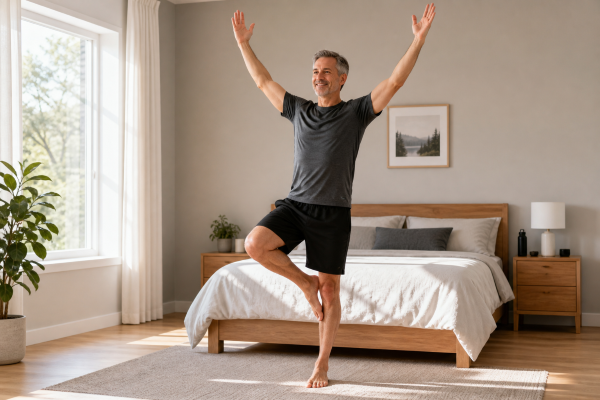
Balance is a use it or lose it skill. Most people do not think about it until they almost fall. After 40 the nerve pathways that help your brain track where your body is in space start to slow down if you do not challenge them regularly. Falls are one of the leading causes of serious injury in adults over 50 and most of them are preventable.
The habit: Stand on one leg while brushing your teeth. Thirty seconds per side. Do it twice a day and you have a full minute of balance training built into something you already do.
- Start near a counter or wall if you need something to grab. Work toward doing it without support.
- To make it harder close your eyes. Your brain relies heavily on vision for balance. Taking that away forces your other systems to work harder.
- You can also do this while waiting for coffee to brew, standing in line, or talking on the phone.
Habit 3: Break Up Sitting Every 50 Minutes
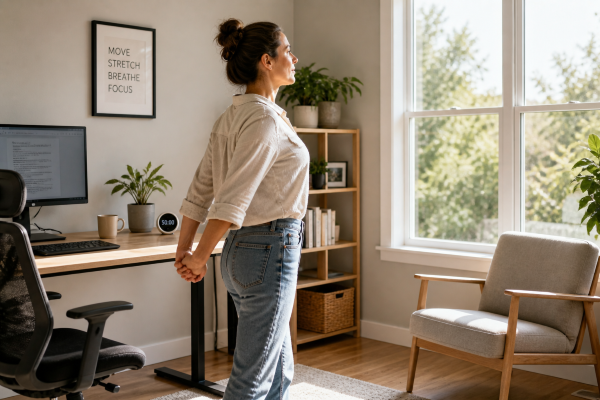
Sitting for extended periods causes your hip flexors to shorten and your glutes to essentially shut off. When your glutes are not firing your lower back has to compensate and that is where the chronic lower back pain comes from. It is not the chair itself. It is the unbroken sitting.
The habit: Set a timer for 50 minutes. When it goes off stand up and do one of these for 60 seconds before sitting back down.
- 5 slow air squats
- A 30-second doorway chest stretch
- A short walk to get water
- Standing hip circles or a brief forward fold
The movement does not need to be long. It just needs to happen. Breaking up sitting regularly throughout the day is one of the most impactful things you can do for your lower back, hips, and overall circulation.
Related: How to Stay Active After 40 Without Overdoing It
Habit 4: Get Outside in the Morning Light

Your circadian rhythm controls far more than just sleep. It regulates your hormones, digestion, metabolism, mood, and energy levels throughout the day. The primary signal that sets your circadian rhythm is light and specifically morning sunlight hitting your eyes.
To sleep well at 10 PM you need to see natural light around 8 AM. When morning light hits your retinas it starts a timer in your brain that triggers melatonin production about 14 to 16 hours later. Miss the morning light and that timer never gets set properly.
The habit: Spend 5 to 10 minutes outside within an hour of waking up. You do not need direct sun. Even on a cloudy day natural outdoor light is significantly more powerful than indoor lighting for setting your internal clock.
- Drink your morning coffee outside if possible.
- Take a short walk around the block right after waking up.
- Do not wear sunglasses for this. The light needs to reach your eyes. Save the sunglasses for when the sun is high.
Related: How to Sleep Better Naturally After 40
Habit 5: Eat Protein at Every Meal

After 40 your body becomes less efficient at using dietary protein to build and maintain muscle. The scientific term is anabolic resistance. What it means practically is that you need more protein than you did in your 30s just to maintain the muscle you already have.
Muscle is not just about strength or looks. It protects your joints, supports your metabolism, improves insulin sensitivity, and is directly linked to longevity and quality of life as you age. Losing it quietly over the years is one of the main reasons people feel weaker and less capable after 50 and 60.
The habit: Include 25 to 30 grams of protein in every meal. Spreading it across meals works better than eating most of it in one sitting because your muscles can only use so much at a time for repair.
- Good sources: eggs, Greek yogurt, cottage cheese, chicken, fish, beef, lentils, tofu.
- A general target is around 1 gram of protein per pound of body weight per day. Adjust based on your activity level.
- Protein also keeps blood sugar more stable which reduces the inflammation that drives joint pain and energy crashes.
Habit 6: Breathe Through Your Nose at Rest
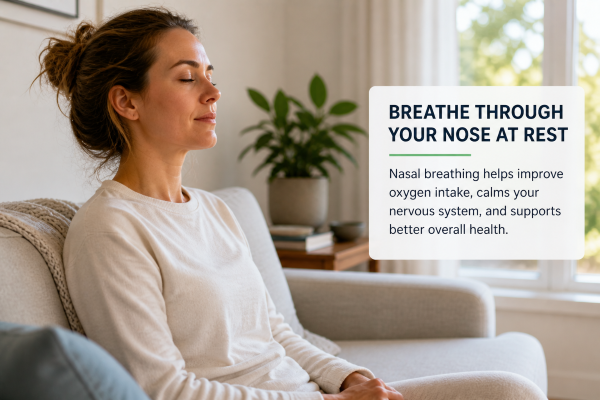
Most people do not think about how they breathe. But chronic mouth breathing keeps your nervous system in a mild state of low-level stress. Your body interprets mouth breathing as a signal that something is wrong and it stays slightly on guard. Over time this raises cortisol levels and cortisol is one of the primary hormones that accelerates aging when chronically elevated.
Nose breathing filters the air, warms and humidifies it before it reaches your lungs, improves oxygen uptake efficiency, and keeps your nervous system in a calmer more restorative state.
The habit: Practice conscious nasal breathing during low-demand activities. While driving, checking email, watching TV, or walking. You do not need to think about it all day. Just notice when you are mouth breathing and gently switch.
- If nasal breathing feels difficult during activity you may be working too hard. Slow down until you can breathe comfortably through your nose. That is your aerobic zone.
- If you wake up with a dry mouth you are likely mouth breathing during sleep. Nasal strips or mouth tape (used carefully) can help with this.
- Chronic nasal congestion that makes nose breathing difficult is worth addressing with a doctor. Sometimes it is as simple as allergies.
Habit 7: Do a 2-Minute Brain Dump Before Bed

One of the most common reasons people over 40 struggle to stay asleep is mental clutter. Your brain keeps rehearsing unfinished tasks, upcoming responsibilities, and unresolved worries throughout the night. It is not a sleep problem. It is an open loops problem.
Your brain treats unfinished tasks like open files on a computer. It keeps them running in the background to make sure you do not forget them. Writing them down closes the file. Your brain gets the signal that the information is stored somewhere safe and it can stop holding onto it.
The habit: Before bed spend 2 minutes writing down the three most important things you need to handle tomorrow. Once it is on paper your brain stops rehearsing it overnight.
- Keep a notepad on your nightstand. Do not use your phone for this.
- Three items maximum. This is not a planning session. It is a release valve.
- If something is bothering you emotionally write one sentence about it too. Getting it out of your head onto paper helps more than most people expect.
Related: How to Build a Simple Bedtime Routine for Better Sleep
Daily Habit Tracker
Use this as a simple reference for building these habits into your day.
| Habit | Daily Goal | Primary Benefit |
| Morning Hydration | 1 glass of water before coffee | Joint lubrication and tissue hydration |
| Balance Training | 60 seconds total while brushing teeth | Fall prevention and better proprioception |
| Movement Breaks | Stand and move every 50 minutes | Hip health and lower back pain prevention |
| Morning Sunlight | 10 minutes outside within 1 hour of waking | Better sleep and hormone regulation |
| Protein Per Meal | 25 to 30 grams at each meal | Muscle retention and joint support |
| Nose Breathing | Conscious nasal breathing at rest | Lower cortisol and better oxygen uptake |
| Brain Dump | 3 items written before bed | Deeper sleep and less mental clutter |
How to Actually Make These Stick
Reading a list of habits is easy. Doing them consistently is where most people struggle. Here is what actually works.
- Start with one. Pick the habit that feels most doable right now and do only that one for two weeks. Let it become automatic before you add the next one.
- Stack habits onto existing ones. The water goes next to the coffee maker. The balance practice happens while you brush your teeth. The brain dump happens when you set your phone down at night. Attach new habits to things you already do.
- Make it visible. Put the notepad on your nightstand. Put the glass next to the coffee maker. Environmental cues do most of the work.
- Do not aim for perfect. Missing one day does not matter. Missing two days in a row starts a new pattern. Just get back to it the next day without making it a big deal.
Start Today
You do not need to wait for a Monday or a new month or the right time. Pick one habit from this list and do it today. Just one. The water before coffee is the easiest starting point. Do it tomorrow morning and notice how you feel.
Small habits compounded over months are what separate people who feel good at 50 and 60 from people who do not. It is never one big change. It is always the small consistent ones.
Related Articles
- How to Stay Active After 40 Without Overdoing It
- How to Sleep Better Naturally After 40
- How to Build a Simple Bedtime Routine for Better Sleep
- Why You Wake Up Stiff and What to Do About It
- Simple Morning Stretches for Tight Joints
This content is for informational purposes only and is not medical advice. Always speak with a qualified healthcare professional before making significant changes to your diet, supplement routine, or exercise habits.